
Eco-Friendly Bags:
How to Choose
the Right Packaging
Not every “eco-friendly” bag is the same. Understand the difference between biodegradable and compostable packaging, then choose the bag format, application and end-of-life pathway that fits your needs.
5 Bag Formats • Tailored Applications • Certified Compostable
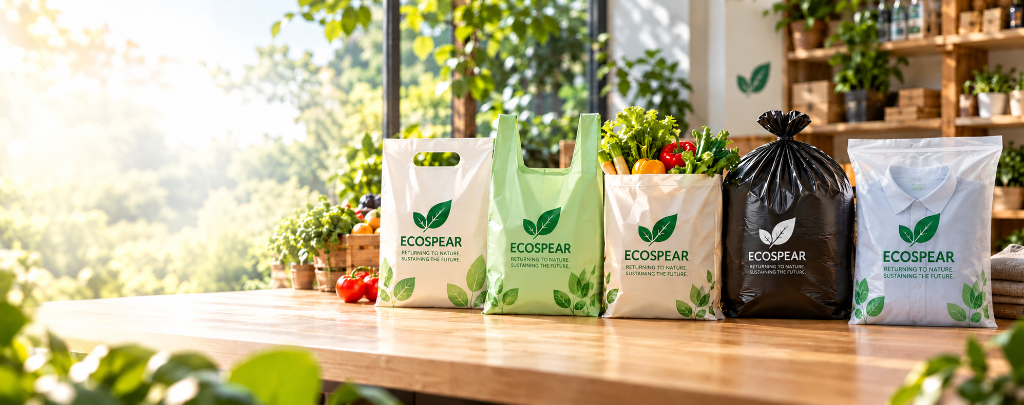
D-Cut • T-Shirt / W-Cut • Grocery • Garbage • Garment Poly Bag
What are you packaging?
Start with your application. Select the option that best matches your need to find the right bag format.

Retail & Shopping
Carry products from stores, boutiques, or grocery checkout.

Grocery & Food
Supermarket produce, dry goods, and grocery handling.
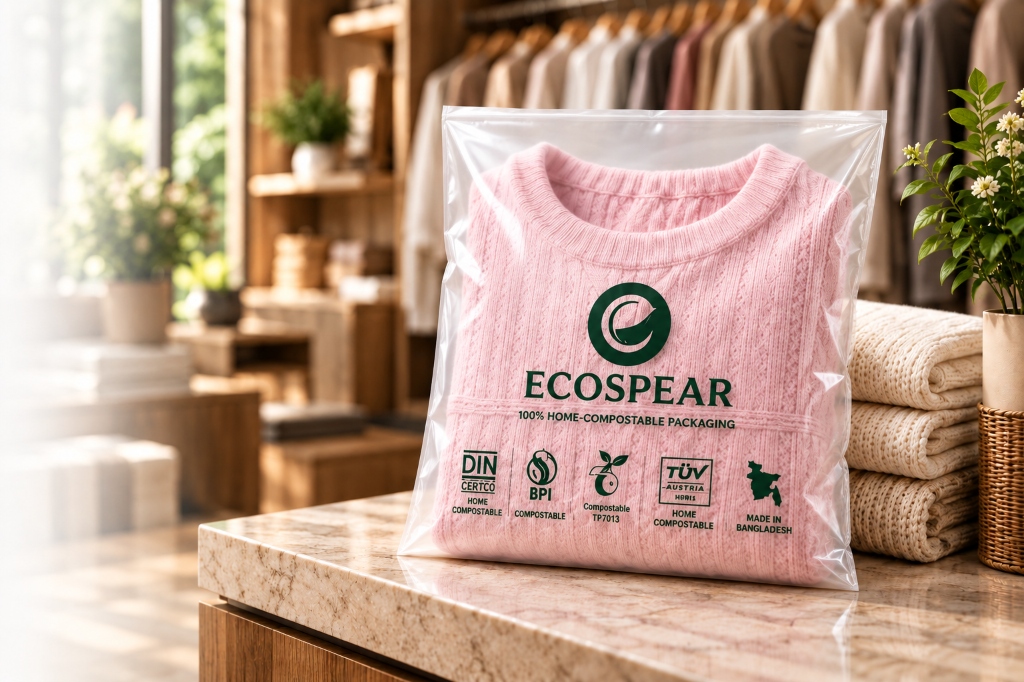
Garments
Protect apparel, RMG export items, and folded clothing.

Waste
Household organic waste or commercial waste collection.
“Eco-Friendly” is not a technical specification.
These terms are often used interchangeably, but they mean different things. Each answers a different question about material, performance and end-of-life conditions.
Eco-Friendly
A broad descriptive encompassing biobased, lower-impact, or sustainable materials.
Biodegradable
Capable of biological breakdown under specified environmental conditions over time.
Compostable
Designed for biological breakdown under defined industrial composting standards.
Home Compostable
Tested for household composting conditions at ambient backyard temperatures.
Certified Claim
Evaluated under a defined standard program and verified by third-party laboratories.
Five Formats. Five Different Jobs.
Each bag format is engineered for a specific weight profile, dispensing format, and retail context.
D-Cut Bags
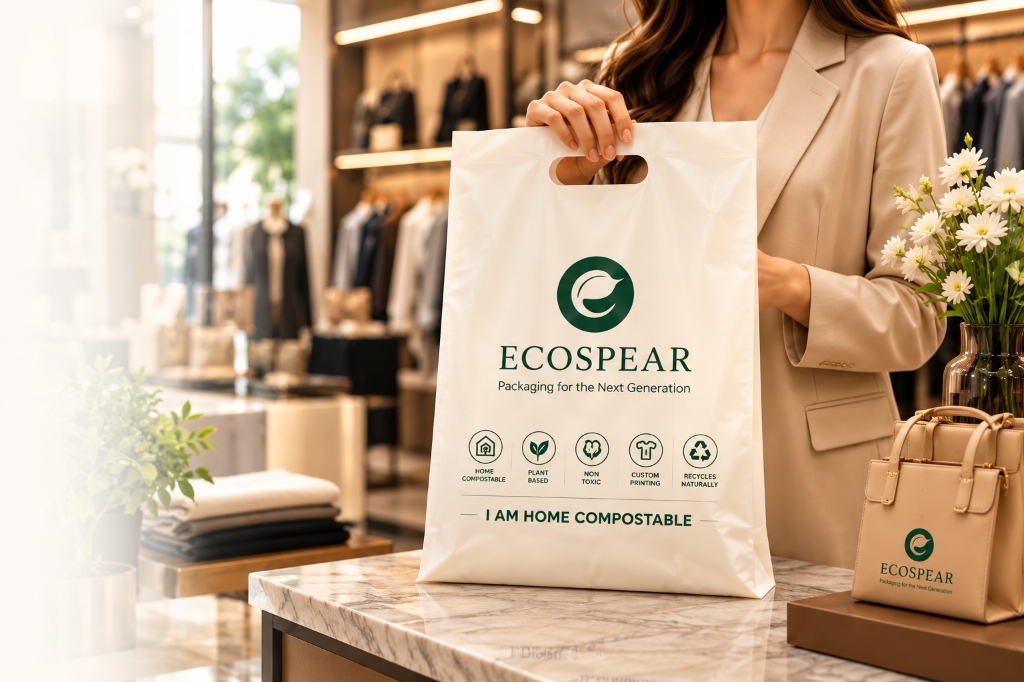
- Integrated D-shaped punch handle
- Ideal for boutiques, retail, and premium carry
T-Shirt / W-Cut Bags

- Shirt-style dual handles & side gusset
- Commonly used for high-volume grocery checkout
Grocery Bags
- Handleless or gusseted open-top format
- Fresh produce, supermarket bulk & bakery goods
Garment Poly Bags
- Adhesive flap closure & vent holes
- Apparel packaging, export cartons & RMG
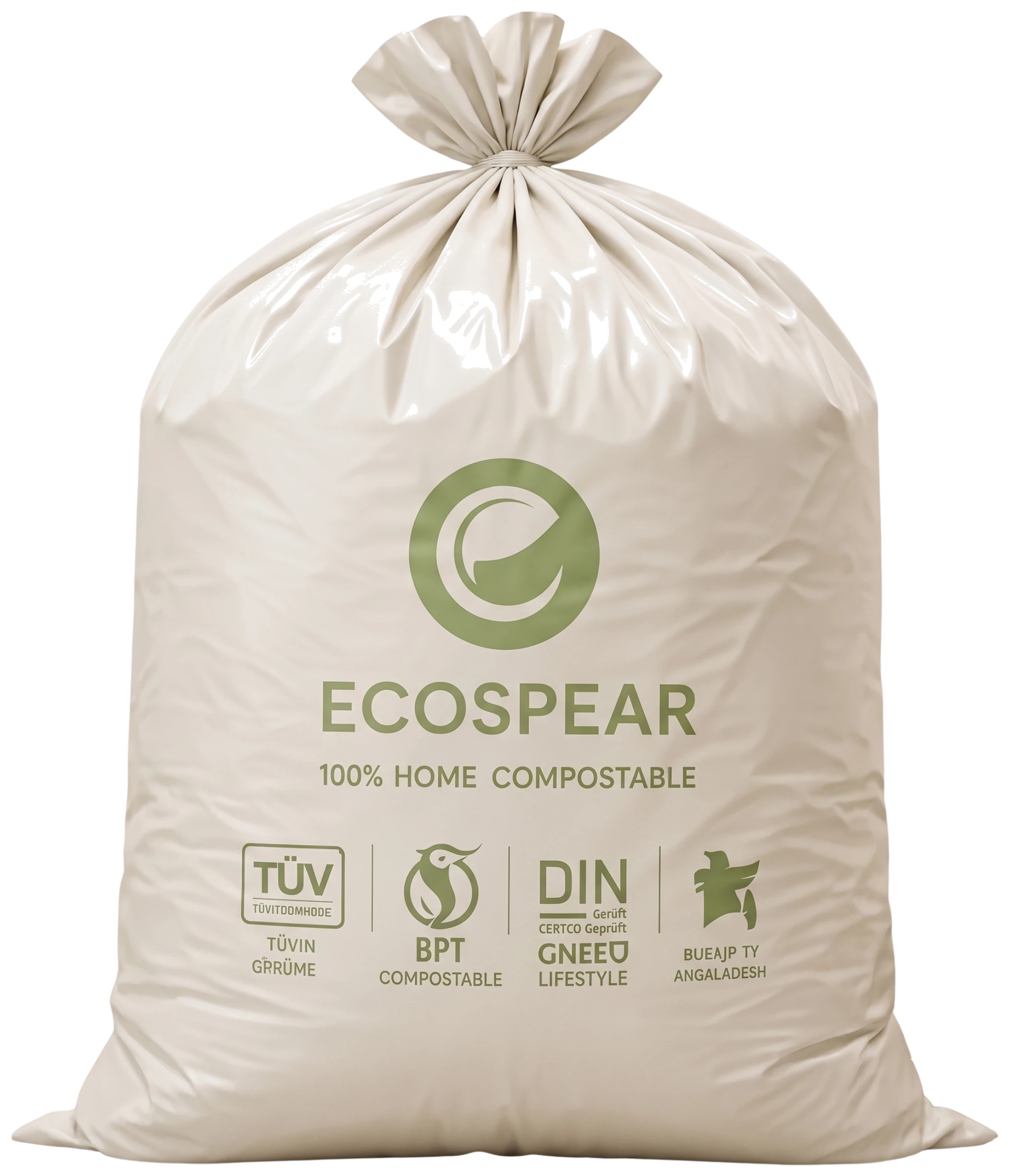
Garbage Bags
- Heavy-duty puncture & leak resistance
- Organic waste bins, food scraps & liners
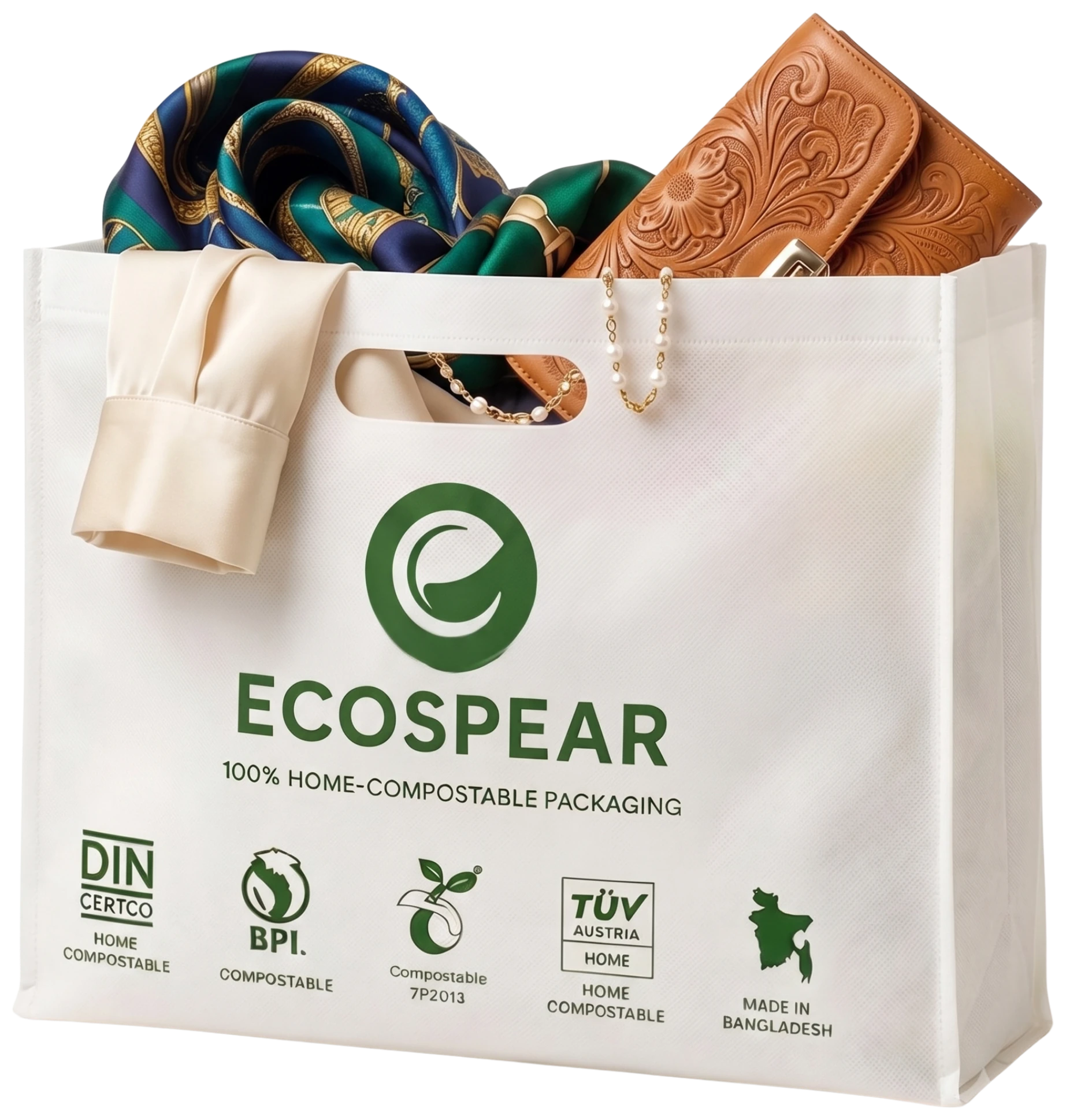
See what makes each bag format different.
Structural anatomy, handle geometry, and sealing methods tailored to your product needs.
D-Cut Bags
T-Shirt / W-Cut Bags

Grocery Bags

Garment Poly Bags
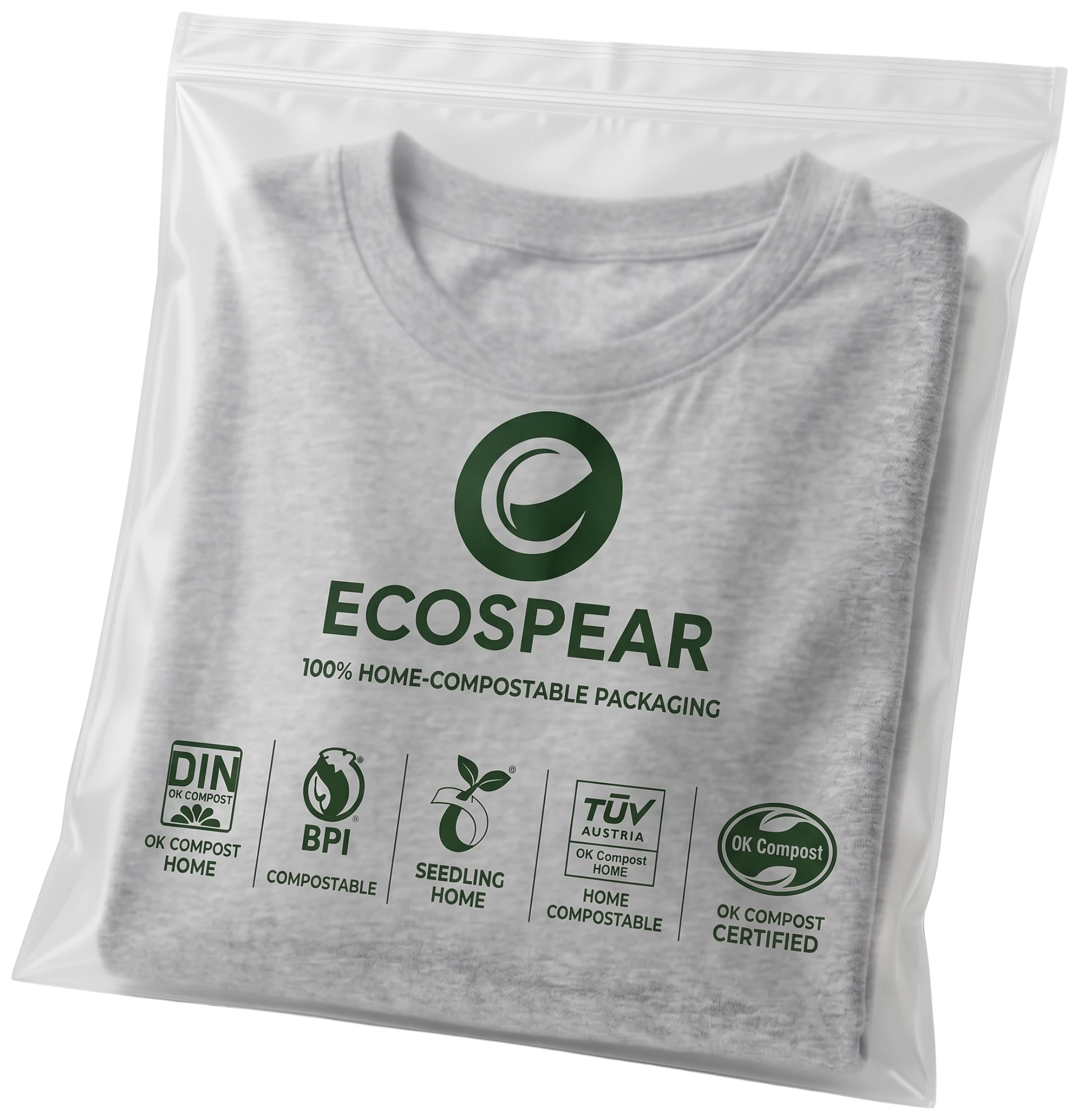
Garbage Bag
Which format fits your application?
Compare load ratings, primary uses, and structural profiles side by side.
| Bag Format | Best Suited For | Key Features | Typical Use Case |
|---|---|---|---|
| D-Cut Bag | Retail, carrying | Integrated D-shaped handle | Retail stores, general carry |
| T-Shirt / W-Cut Bag | Carrying, shopping | Shirt-style handles | Supermarkets, retail, daily use |
| Grocery Bag | Grocery, retail | Handleless / gusseted design | Grocery & supermarket use |
| Garment Poly Bag | Garment protection | Adhesive flap closure, side seal | RMG and apparel packaging |
| Garbage Bag | Waste collection | Heavy-duty construction | Household and commercial waste |

Don’t Be Fooled
by the Word “Degradable.”
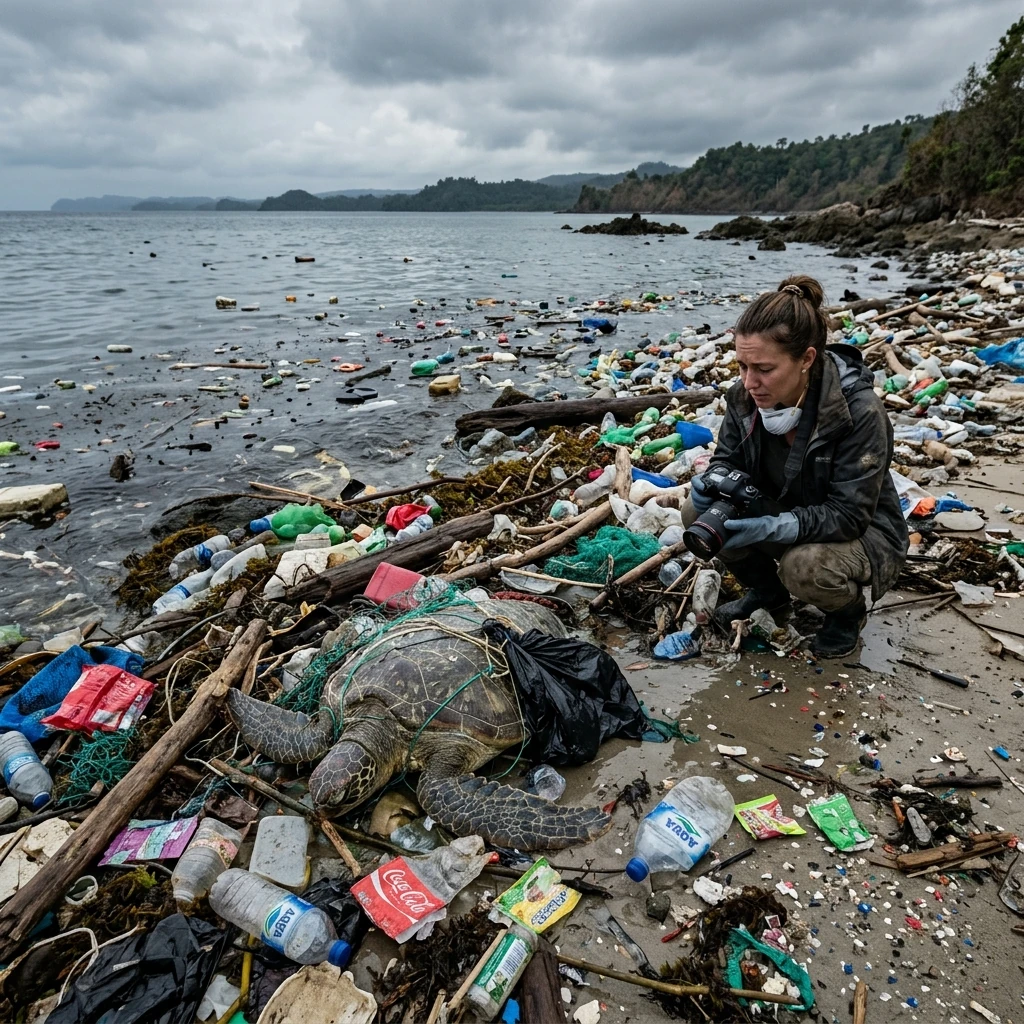
Some “degradable” plastic bags don’t turn into nature. They can break into tiny plastic fragments instead.
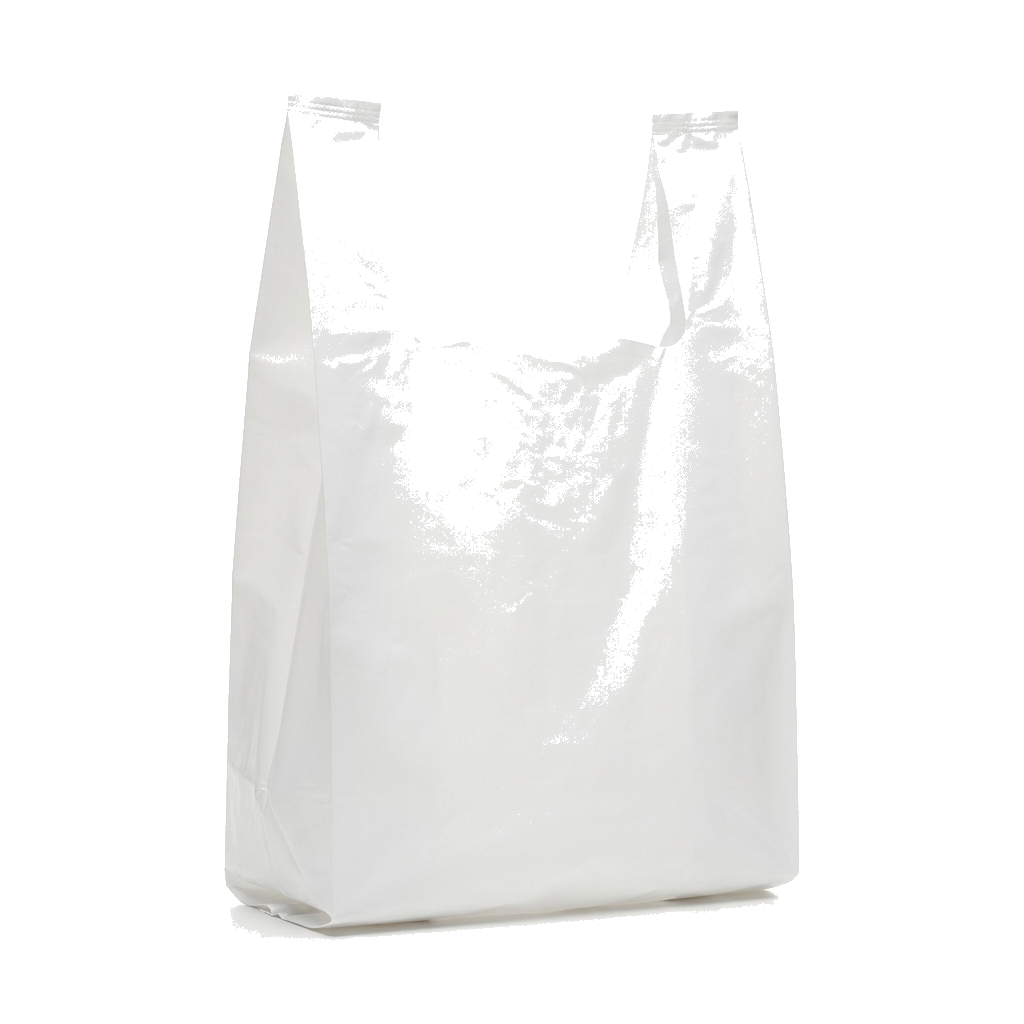
Bag

Fragments
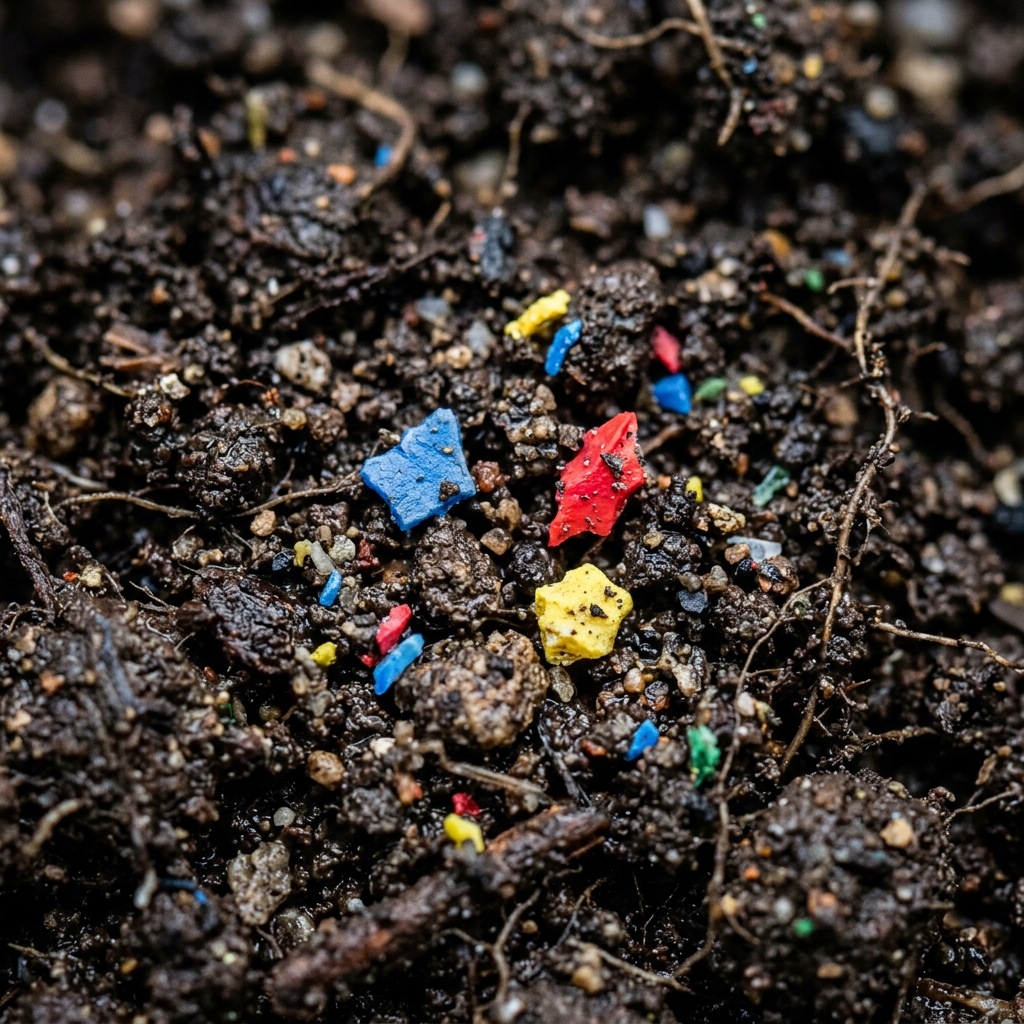
Microplastics
Products made from oxo-degradable plastic are banned in the EU due to concerns including microplastic pollution and incomplete biodegradation.
Follow the simple guide to identify the right bag.
A fast decision path to map your inventory requirement directly to the ideal packaging construction.
Tell us what you are packaging, where it will be used, and how it needs to perform. We provide technical consultation and sample evaluations.
What Happens After the Bag Is Used?
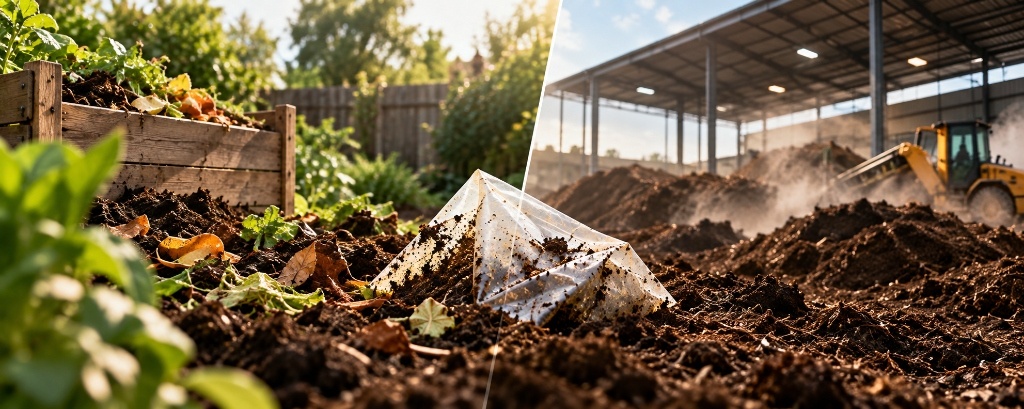
The end-of-life pathway depends on the material composition and the intended disposal conditions.


Where does it need to break down?
Compostable products are formulated and certified for different breakdown environments.
Home Composting
- ●Household backyard environment
- ●Lower & variable temperatures (20–30°C)
- ●Different testing conditions & timelines
- ●Requires NF T51-800 / OK Compost HOME
Industrial Composting
- ●Managed commercial facility
- ●Controlled thermophilic heat (55–60°C)
- ●Standardized 180-day degradation
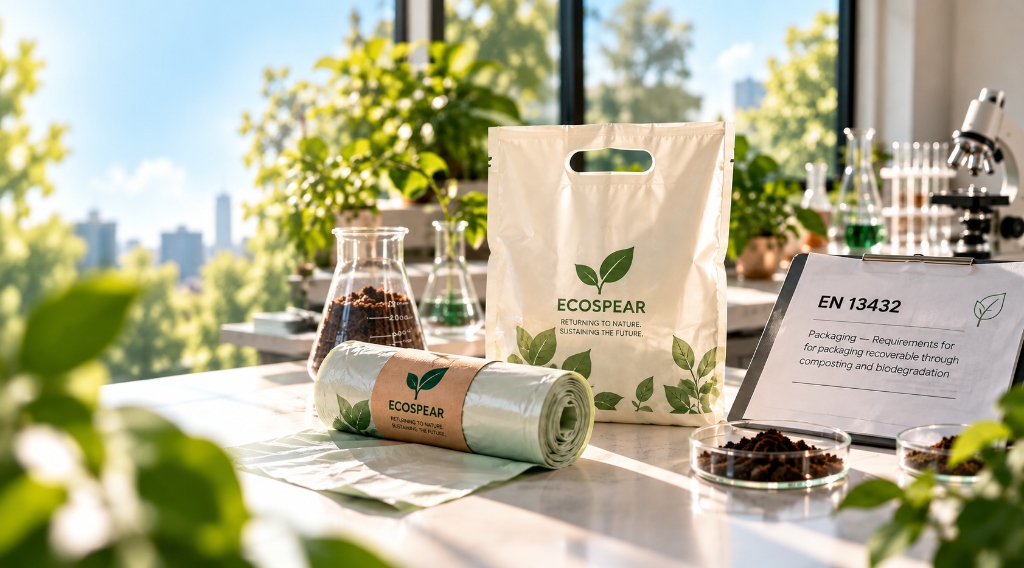
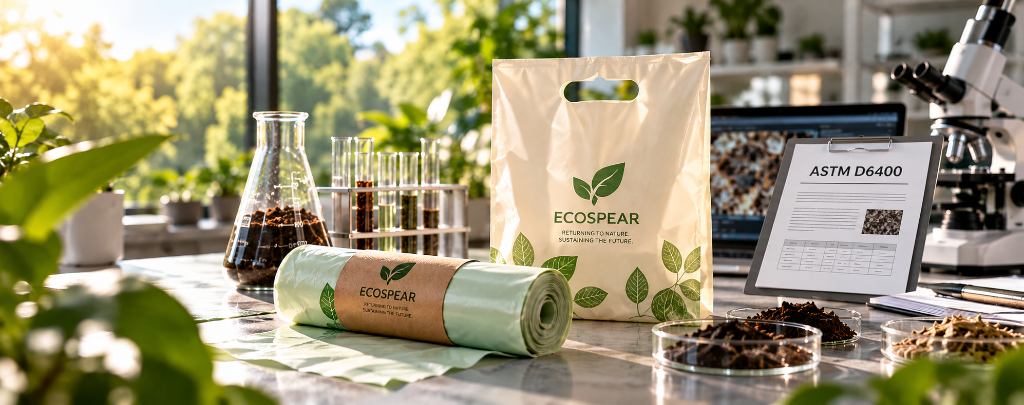
- ●Certified via EN 13432 / ASTM D6400
Don't Choose by Appearance
A bag that looks like plastic or paper does not automatically indicate its true environmental performance.
Looks like plastic
 Looks like paper
Before You Choose a Bag
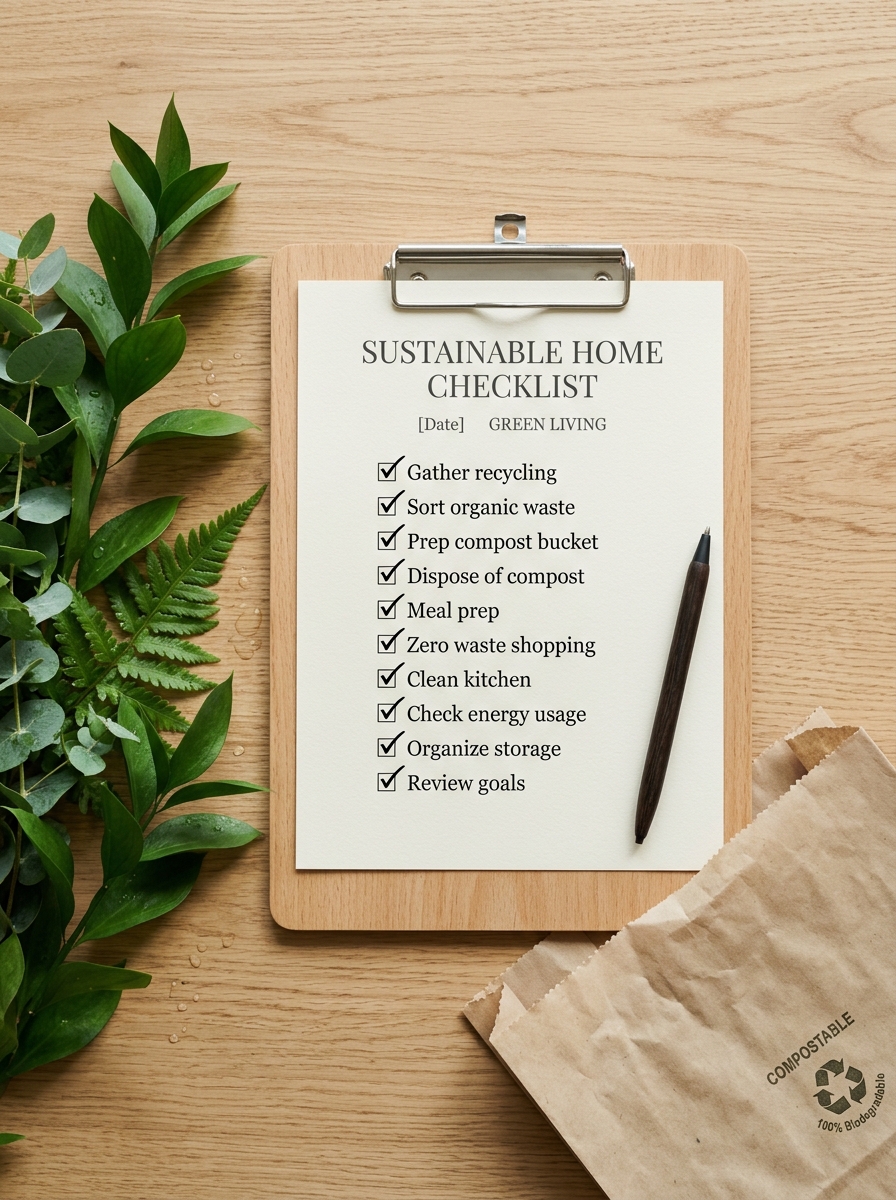
Ask these 7 essential technical questions before placing bulk orders:
Clear answers to frequent questions.
Dispelling myths and setting the facts straight for institutional and retail packaging buyers.
Biodegradable means compostable.
Not necessarily. Biodegradation has no fixed timeframe unless certified.
Compostable means it will disappear anywhere.
No. Requires specific biological conditions →
Compostable automatically means home compostable.
No. Most require industrial temperatures →
Eco-friendly means certified.
No. Eco-friendly is an unregulated marketing claim.
A certification logo covers every product in catalog.
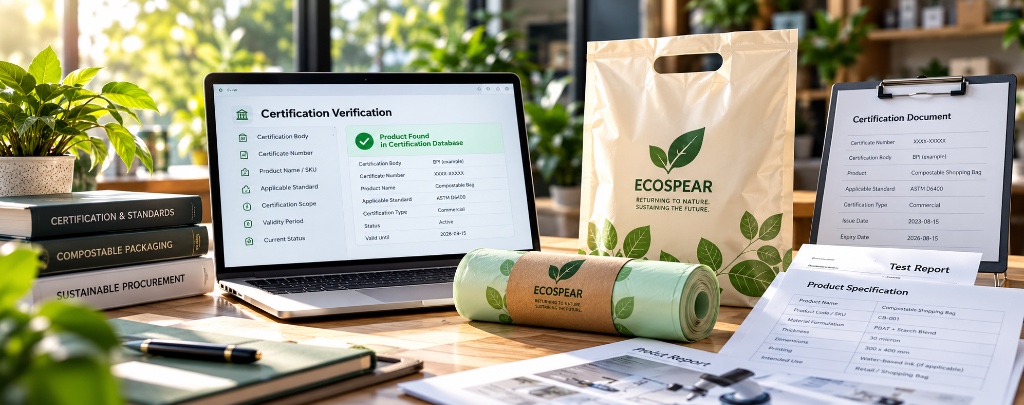
No. Certifications apply to specific formulations and thicknesses.
If a bag looks like plastic, it must be conventional plastic.
No. Biobased polymers share similar clarity and strength →
Learn More in the Knowledge Center
Peer-reviewed technical guides and standards for packaging engineers and procurement leaders.

It depends on your priorities.
Not Sure Which Packaging Fits Your Application?
Tell us what you are packaging, how it will be used, and where it needs to go after use. We will help you identify the right packaging format and provide certified technical specifications.