

A Quick Answer
When packaging is described as biodegradable, compostable, or both, it is easy to assume the terms mean the same thing. They do not.
The important difference is not simply whether a material can eventually break down. The more useful question is: Under what conditions, over what timeframe, and with what requirements is that breakdown expected to occur?
That distinction matters when choosing packaging for commercial procurement.
What Do the Terms Mean?
Biodegradable
Refers to the biological breakdown of a material by microorganisms (bacteria, fungi) into water, biomass, and gases.
- Does not specify a single disposal environment
- Does not automatically establish a defined timeframe
- The claim requires context and verified evidence
Compostable
A specific, standardized performance pathway where the product breaks down in a composting system without toxic residue.
- Associated with specified composting conditions
- Requires performance against standardized criteria
- Backed by third-party testing and certification
What Does “Biodegradable” Mean?
In general terms, biodegradation refers to biological breakdown of a material by microorganisms and related biological processes. But “biodegradable” by itself does not fully describe where, how quickly, or under what conditions that breakdown will occur.
For example, a material may behave differently in industrial composting conditions, home composting conditions, soil, freshwater, marine environments, landfill conditions, or other environments. Temperature, moisture, oxygen availability, microbial activity, material composition, thickness, and other factors heavily influence degradation rates.
That is why simply seeing the word biodegradable on packaging is not enough to understand its real-world end-of-life pathway.
Instead of asking only “Is this material biodegradable?”, a buyer should also ask: “Biodegradable under what conditions, and according to what evidence?”
This distinction is particularly important for commercial packaging procurement.
What Does “Compostable” Mean?
Compostable describes a more specific performance pathway. A compostable product is intended to break down under specified composting conditions and satisfy defined requirements for compostability.
For example, ASTM D6400-26 covers plastics and plastic products designed to be composted under aerobic conditions in municipal or industrial composting facilities where thermophilic conditions are achieved. The standard addresses requirements used to determine whether such products compost satisfactorily and provides requirements for labeling them as compostable in those facilities.
Compostability therefore involves more than simply saying that something eventually biodegrades. Depending on the applicable standard or certification scheme, assessment involves:
- Biodegradation: Quantitative conversion of organic carbon into CO₂, water, and minerals within a fixed timeframe (typically ≥90% in 180 days).
- Disintegration: Physical fragmentation during the composting cycle such that no more than 10% of the original dry weight remains on a 2mm sieve after 12 weeks.
- Effects on the Composting Process: Ensuring the material does not negatively affect the operating parameters (pH, bulk density, moisture balance) of the composting facility.
- Effects on Resulting Compost: Verification that finished compost supports plant growth and maintains optimal agronomic quality.
- Ecotoxicity & Chemical Safety: Strict limits on heavy metals (zinc, copper, lead, cadmium, mercury, arsenic), fluorine (PFAS thresholds), and absence of ecotoxicological inhibition.
- Defined Testing Procedures: Rigorous laboratory execution under controlled aerobic or ambient environments.
Key Differences at a Glance
The simplest way to understand the distinction between biodegradable and compostable:
| Aspect | Biodegradable | Compostable |
|---|---|---|
| What it means | Describes biological breakdown | Describes suitability for a defined composting pathway |
| Disposal Environment | Does not, by itself, specify one disposal environment | Associated with specified composting conditions |
| Timeframe | Does not automatically establish a timeframe | Requires performance against defined requirements |
| Home compostable? | Does not automatically mean home compostable | Does not automatically mean home compostable |
| Evidence & Claims | The claim needs appropriate evidence | The claim needs appropriate evidence and, where applicable, certification |
| Takeaway for Buyers | “Biodegradable” alone may leave important questions unanswered | A meaningful compostable claim should identify the relevant conditions or certification scope |
The important point: Compostable and biodegradable should not be treated as interchangeable marketing words.
Why End-of-Life Conditions Matter
A material does not behave identically everywhere. A composting facility is a controlled biological environment that provides elevated temperature, moisture, oxygen, microbial activity, and mechanical agitation. A backyard compost pile, natural soil, or a landfill has completely different physical and biological conditions.
Different Environments, Different Outcomes
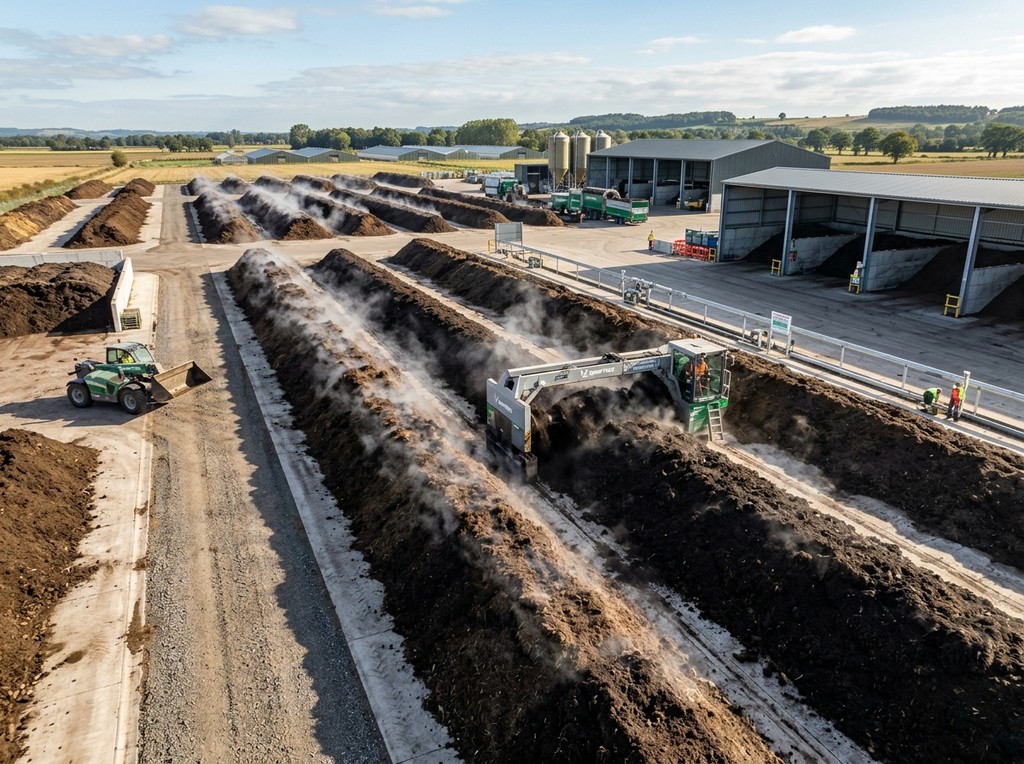 55°C–60°C
Industrial Composting
High temperature, controlled aeration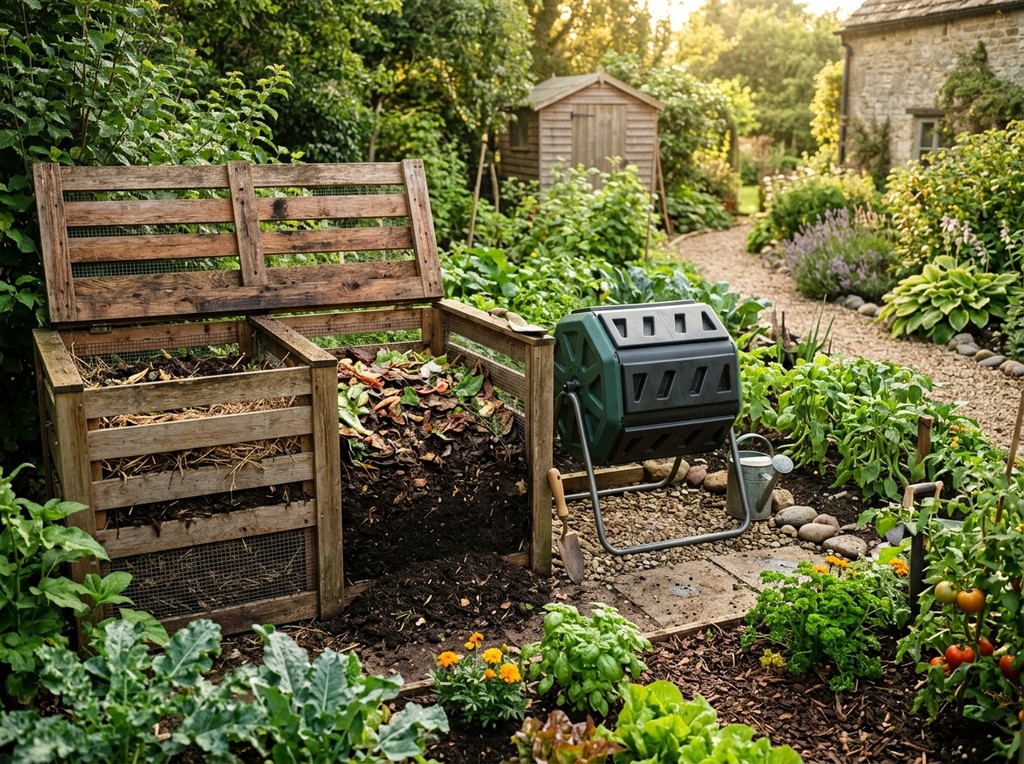 20°C–30°C
Home Composting
Ambient & varying seasonal conditions Natural Soil
Soil
Dependent on local soil microbiome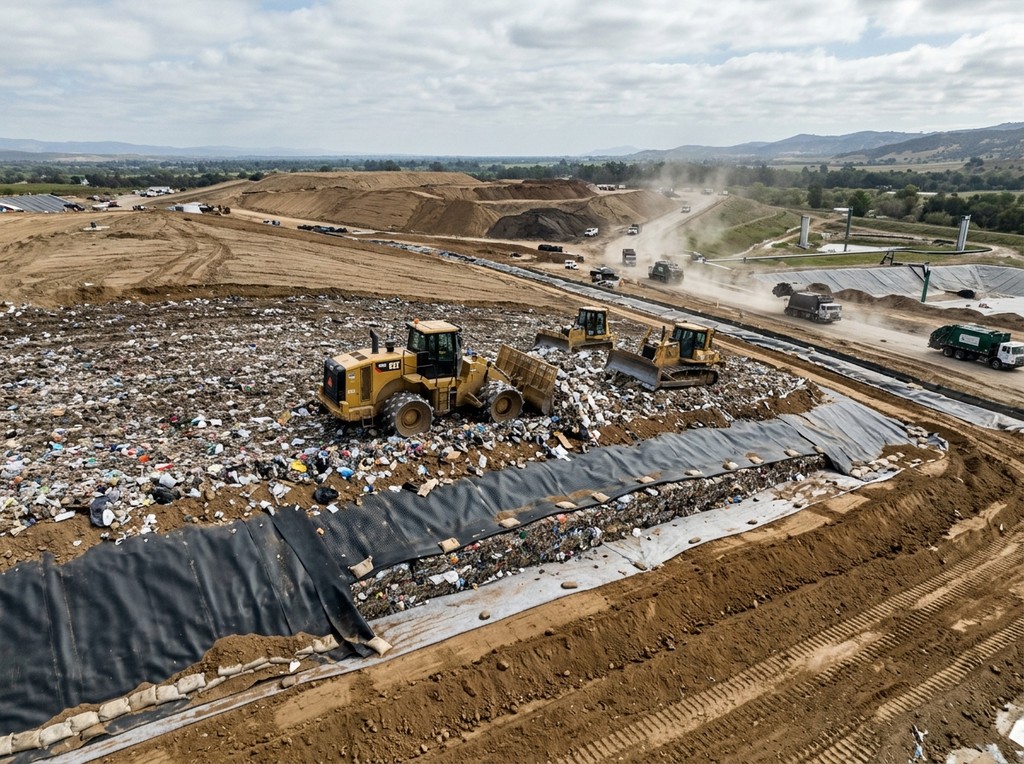 Anaerobic
Landfill
Compacted, oxygen-deprivedThis means that simply saying: “It biodegrades.” does not answer the buyer’s most important practical question: “What happens to it after I use it?”
For packaging procurement, the intended disposal environment should therefore be considered alongside material specifications and product performance.
Compostable does not automatically mean home compostable.
A product designed and certified for commercial or industrial composting should not automatically be described as suitable for a backyard compost pile. Industrial composting facilities achieve sustained thermophilic temperatures (55°C–60°C) with controlled moisture and forced aeration. Backyard compost heaps fluctuate with seasons and rarely sustain such conditions.
For example, ASTM D6400-26 specifically addresses municipal and industrial aerobic facilities. Home compostability is a separate technical category requiring specialized resin formulations that degrade safely at lower ambient temperatures (20°C–30°C).
Why Certification Matters
A certification or conformity assessment provides third-party evidence that a particular product has been evaluated against rigorous requirements. But there is a crucial distinction:
A Standard
Defines explicit technical requirements, laboratory test methods, and pass/fail thresholds (e.g., ASTM D6400, EN 13432).
A Certification
Provides independent conformity assessment against applicable standards by an accredited certifying body (e.g., BPI, DIN CERTCO, TÜV AUSTRIA).
Certification of one product does not automatically mean that every product manufactured by the same company has the same certification status. Certification is always product-, formulation-, and thickness-specific.
9 Essential Questions Procurement Teams Should Ask
Use this verification checklist when reviewing vendor compliance claims
EN 13432, ASTM D6400, and BPI: Why Buyers See Different Names
Different international export markets and regulatory jurisdictions reference specific conformity standards:
ASTM D6400-26
North American standard for plastics designed for aerobic composting in municipal or industrial facilities.

EN 13432
European harmonized standard for packaging recoverable through industrial composting and biodegradation.

BPI Certification
Commercial (ASTM D6400) and Home (NF T 51-800) certification programs administered in North America.

TÜV AUSTRIA
Global certifications including OK compost INDUSTRIAL and OK compost HOME testing schemes.
Therefore, a responsible buyer should not ask only “Is this certified?”. Ask: “Certified to what standard, by which organization, for which specific SKU, and for which end-of-life environment?”
Common Misunderstandings
“Biodegradable Means It Will Disappear Anywhere”
It is tempting to think that biodegradable packaging will simply disappear wherever it is discarded. That is an oversimplification. The disposal environment dramatically impacts microbial activity.
The U.S. Federal Trade Commission’s (FTC) Green Guides state that marketers making compostable claims require competent and reliable scientific evidence that materials will break down safely into usable compost in about the same time as the materials with which they are composted. The FTC similarly advises qualifying claims when the required composting facility is not accessible to a substantial majority of consumers or when the item is unsuitable for home composting.
Unqualified degradable claims can be legally deceptive where customary disposal conditions (such as landfills) do not support the claimed timeframe.
What About “100% Biodegradable”?
The phrase sounds reassuring, but it does not provide actionable technical data. A responsible technical assessment evaluates:
The FTC explicitly notes that third-party certification does not remove the marketer’s legal responsibility to substantiate express and implied claims.
Does Compostable Mean Automatically Better?
Not automatically. The correct question is not “Which word sounds greener?”, but “Which material and end-of-life pathway is appropriate for this application and supported by evidence?”
A comprehensive packaging decision should balance: product barrier properties, durability, food-contact safety, material composition, disposal infrastructure, applicable standards, regulatory rules, and total lifecycle impact. Compostability is one valuable attribute of a packaging system, not a universal substitute for lifecycle assessment.
What Should B2B Buyers Look For?
If you are sourcing compostable or biodegradable packaging, avoid making decisions based on a single marketing term or logo. Use this 6-step procurement framework:
Define the Product
Specify bag format (such as T-Shirt Bags, D-Cut Bags, or Garbage Bags), exact dimensions, thickness (μm), required load capacity, printing requirements, and expected order quantity.
Define the End-of-Life Requirement
Determine whether the target pathway is industrial composting, home composting, or another defined route. Do not treat these as interchangeable.
Request Technical Documentation
Request technical data sheets (TDS), formulation details, accredited laboratory test reports, certificate numbers, certification scope, and applicable standards.
Verify the Certification
Where independent certification bodies maintain public searchable databases (DIN CERTCO, TÜV AUSTRIA, BPI), verify the certificate validity directly in the official registry.
Verify the Exact Product & Gauge
Confirm that the specific SKU, thickness, and formulation being purchased is explicitly within the maximum certified thickness limit.
Evaluate the Manufacturer
A credible manufacturer demonstrates raw-material traceability, in-house QA, tensile testing, sampling protocols, MOQ, lead times, and export compliance.
“Biodegradable” tells you that biological breakdown is possible; “compostable” tells you that the product is intended to meet defined composting requirements under specified conditions.
Frequently Asked Questions
Is biodegradable the same as compostable?
No. Biodegradable describes biological breakdown, while compostable refers to a more specific performance pathway under defined composting conditions and requirements.
Are all compostable products biodegradable?
Compostability involves biodegradation, but a compostability claim is broader than simply saying that a material biodegrades. Relevant standards and certification schemes include additional requirements such as physical disintegration and absence of ecotoxic effects on the composting process.
Are compostable bags biodegradable?
A properly supported compostable bag is expected to biodegrade under the composting conditions covered by its applicable standard or certification. The exact claim should be verified against product documentation and certification scope.
Does compostable mean home compostable?
No. A product designed or certified for industrial/commercial composting should not automatically be treated as suitable for home composting, which operates at lower ambient temperatures.
Does biodegradable mean it will break down in a landfill?
Not necessarily. Landfill environments lack oxygen, moisture circulation, and the microbial density required for efficient degradation. A biodegradable claim does not guarantee breakdown in a landfill.
How can I verify whether a compostable bag is genuinely certified?
Check the certification organization’s official public database. Match the certificate number to the manufacturer name, SKU, formulation, standard (e.g. EN 13432, ASTM D6400), and validity dates.
What is ASTM D6400?
ASTM D6400 is an ASTM International standard specification covering plastics designed for aerobic composting in municipal or industrial composting facilities. The current edition is ASTM D6400-26.
What is EN 13432?
EN 13432 is a European harmonized standard for packaging recoverable through industrial composting and biodegradation, specifying test programs and evaluation criteria for compostability.
Does a certification logo prove every environmental claim?
No. Certification proves compliance solely with the specific standard and scope tested. Additional environmental claims require separate, independent substantiation.
What Buyers Should Take Away
The biodegradable-versus-compostable question is not really about choosing the more attractive word. It is about understanding material behaviour, intended conditions, evidence, certification, and end-of-life infrastructure.