
A Quick Answer
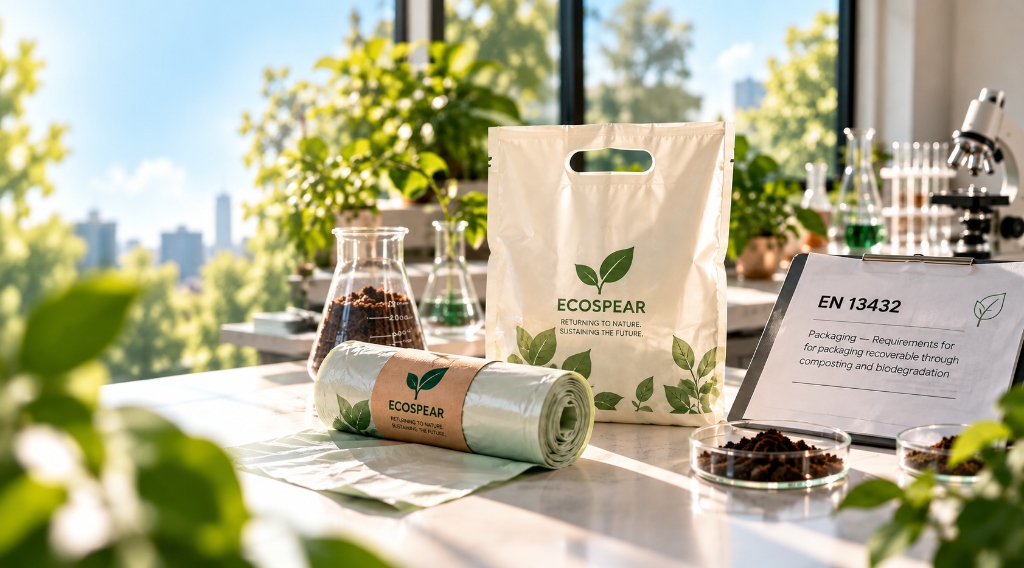
EN 13432 is a European standard titled “Packaging — Requirements for packaging recoverable through composting and biodegradation — Test scheme and evaluation criteria for the final acceptance of packaging.” It establishes requirements and evaluation methods for packaging intended to be recoverable through composting and biodegradation. [DIN] (opens in a new tab)
It is essential to separate three foundational layers:
- The standard: Defines technical criteria, test schemes, and thresholds.
- Testing: Evaluates whether the packaging meets specific laboratory parameters.
- Certification / Conformity: Provides third-party verified documentation for a specific product and formulation.
So an important procurement question is not simply: “Is this EN 13432?” but: “Can you show me current evidence that the exact product and formulation I am buying has been evaluated against the applicable requirements?”
What Is EN 13432?
EN 13432 is a European harmonized standard addressing packaging designed to be recoverable through composting and biodegradation. Its official full title is:
“Packaging — Requirements for packaging recoverable through composting and biodegradation — Test scheme and evaluation criteria for the final acceptance of packaging.”
The standard has been referenced by European institutions as a primary benchmark for characteristics that packaging must satisfy to be considered compostable in biological recovery systems. [Eur-Lex] (opens in a new tab)
DIN currently lists DIN EN 13432 as the German national adoption of EN 13432:2000, while national adoptions such as BS EN 13432 (UK) and other European versions are also officially registered. [DIN] (opens in a new tab)
In simple terms: EN 13432 asks whether packaging can satisfy a defined set of requirements associated with biological recovery through composting. It is therefore significantly more rigorous and meaningful than simply claiming a product is “biodegradable.”
What Does EN 13432 Actually Evaluate?
The standard is not a single pass/fail test, nor are these four core pillars an exhaustive reproduction of every technical clause in the official standard document. Rather, its comprehensive framework addresses key aspects of what happens to packaging during biological recovery. Four foundational evaluation pillars are especially critical for buyers to understand:
1. Biodegradation
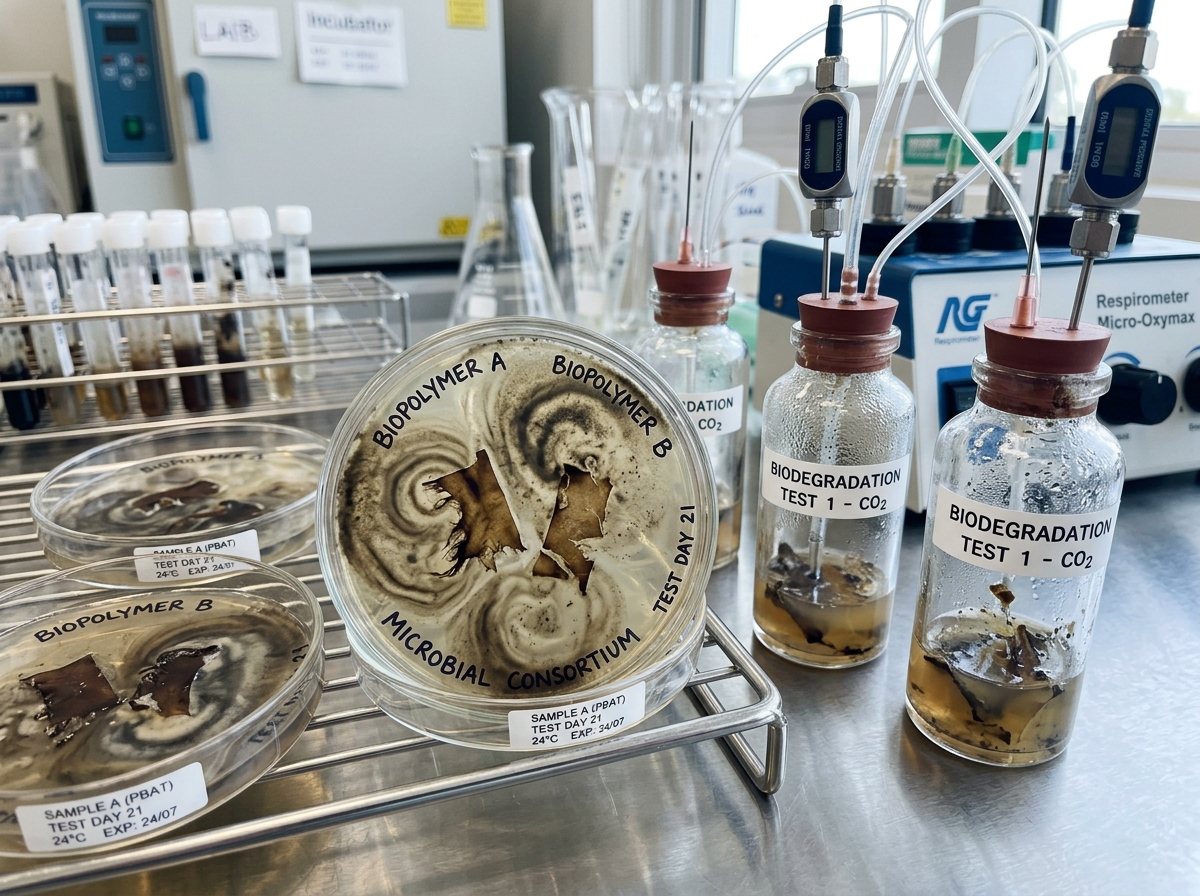
The material must undergo biological degradation under specified test conditions (converting >90% organic carbon into CO₂, water, and biomass within 180 days).
Question: Does it meet defined microbial metabolic conversion thresholds?

2. Disintegration
Disintegration considers how the packaging breaks down physically under defined composting conditions (<10% residue remaining on a 2mm sieve after 12 weeks).
3. Effects on the Process
Packaging must not adversely affect the composting process, temperature evolution, pH, or microbial consortium balance during composting.
Compostability requires demonstrating zero negative disruption to composting operations.

4. Compost Quality & Toxins
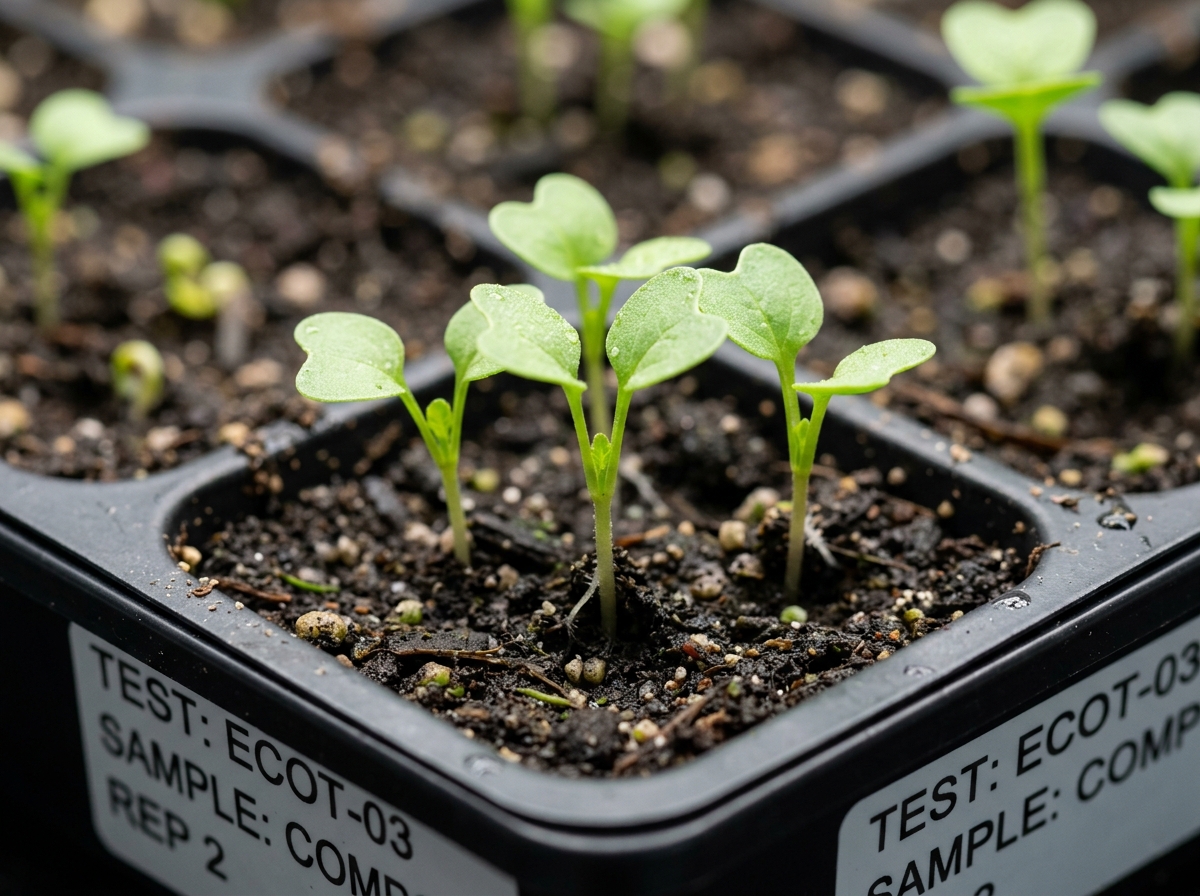
Strict limits on heavy metals, fluorinated compounds (PFAS), and ecotoxicity plant germination tests (>90% plant emergence rate vs control). [CEN] (opens in a new tab)
Compostable packaging must enrich the soil, leaving zero toxic residues.
The EN 13432 Evaluation Framework
A structured view of how the technical evaluation stages connect from raw packaging to certified end of life.
Intended for biological recovery
Performed under defined standards
Biodegradation, disintegration & quality
Conformity under accredited scheme
Industrial composting recovery
This end-to-end framework is what separates verified compostable packaging from vague “biodegradable” marketing claims.
Why Industrial Composting Conditions Matter
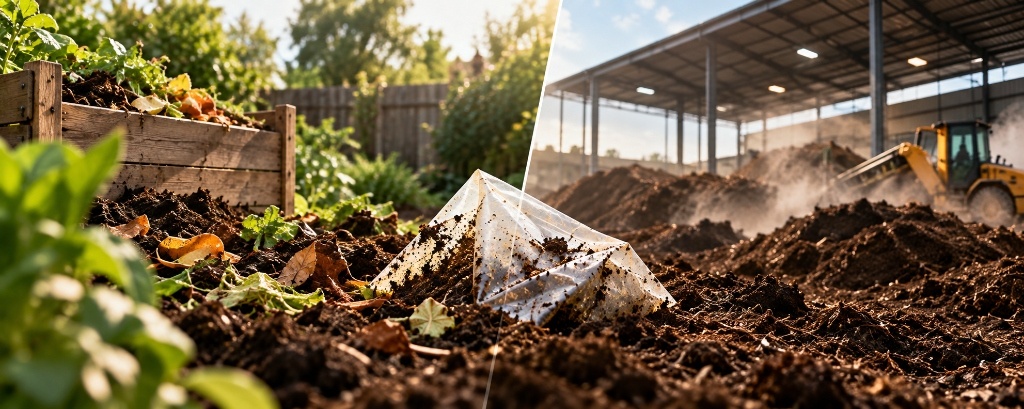
EN 13432 is not a promise that packaging will disappear in open nature or landfill. Its criteria are evaluated under thermophilic industrial composting conditions (55°C–60°C). A product meeting EN 13432 must not automatically be assumed to break down in a backyard bin.

EN 13432 and Home Composting
The EU Packaging and Packaging Waste Regulation (PPWR) identifies the need to revise EN 13432 and is formalizing a harmonized EU standard specifically for home compostability. [Eur-Lex] (opens in a new tab)
EN 13432 vs ASTM D6400
Both standards address compostable packaging in municipal and industrial facilities, but they serve different regional standards bodies and jurisdictional frameworks.
| Aspect | EN 13432 | ASTM D6400 |
|---|---|---|
| Standard Body | European Committee for Standardization (CEN) | ASTM International (USA / Global) |
| Scope & Focus | Packaging recoverable through composting | Plastics designed for aerobic composting |
| Composting Context | Industrial / commercial facilities | Municipal & industrial aerobic systems |
| Testing Framework | Test scheme & pass/fail criteria | Standard specification requirements |
| Common Certifications | Seedling Logo, DIN-Geprüft, TÜV Austria | BPI (Biodegradable Products Institute) |
| Home Composting | Not automatically established | Not automatically established |
| Primary Buyer Question | What lab report & license covers this product? | What BPI certificate covers this formulation? |
No Single Standard Is “Better”
The right standard depends on your target market (EU vs North America), regulatory claims, and local composting infrastructure.
EN 13432 Is a Standard — Not a Certification
Suppliers often use terms like “EN 13432 compliant” or “certified compostable” interchangeably. Technically, they represent separate steps in the verification hierarchy:
Defines technical test methods, pass/fail thresholds, and recovery specifications.
Issues formal licenses (e.g., TÜV Austria, DIN CERTCO) verifying a specific finished product.
What Buyers Should Ask
Go beyond marketing claims. Request documented evidence.
Common Misunderstandings
Clarifying frequent misconceptions regarding the scope and limits of EN 13432.
Frequently Asked Questions
Key technical and commercial answers regarding EN 13432 compliance.
What is EN 13432?
EN 13432 is the European harmonized standard defining requirements, test schemes, and pass/fail criteria for packaging recoverable through biological composting and anaerobic digestion.
Is EN 13432 a certification?
No. EN 13432 is a technical standard. Certification is an independent verification process conducted by accredited certification bodies (e.g. TÜV Austria, DIN CERTCO) which award logos and license IDs.
Does EN 13432 mean a product is compostable?
It means the material has been evaluated against compostability requirements under industrial composting conditions. Buyers should always verify the actual test report and certification certificate.
Does EN 13432 mean home compostable?
No. EN 13432 specifically addresses industrial composting at 55°C–60°C. Home compostability requires separate testing under ambient temperatures (e.g., NF T51-800 or AS 5810).
What does EN 13432 test?
Four key aspects: (1) Biodegradation (>90% in 180 days), (2) Physical disintegration (<10% residue >2mm in 12 weeks), (3) Zero negative effects on the composting process, and (4) High compost quality & heavy metal limits.
Is EN 13432 the same as ASTM D6400?
They are closely aligned in testing parameters, but EN 13432 is the European standard (CEN), whereas ASTM D6400 is the American standard (ASTM International).
How can I verify an EN 13432 claim?
Request the full laboratory test report from an accredited lab, verify the certificate registration ID on the certification body's public database, and ensure the tested formulation matches your ordered bag specs.
Does EN 13432 guarantee quick disappearance?
No. It defines performance under industrial composting conditions within 12 to 24 weeks. It is not an authorization to dispose of packaging in roadside litter or open water.
The Bottom Line
EN 13432 gives the compostable packaging industry a rigorous, science-backed technical framework for biological recovery. But a standard is only one part of the evidence chain.
For buyers, the real question is not: “Does the supplier say EN 13432?” It is: “Can the supplier demonstrate that the exact product I am buying has documented test reports and third-party certification behind that claim?”
Related Knowledge

Need compostable packaging for a real-world application?
Understand the science and verify the evidence. Explore compliant formats including export-ready Garment Poly Bags and boutique D-Cut Carrier Bags.