
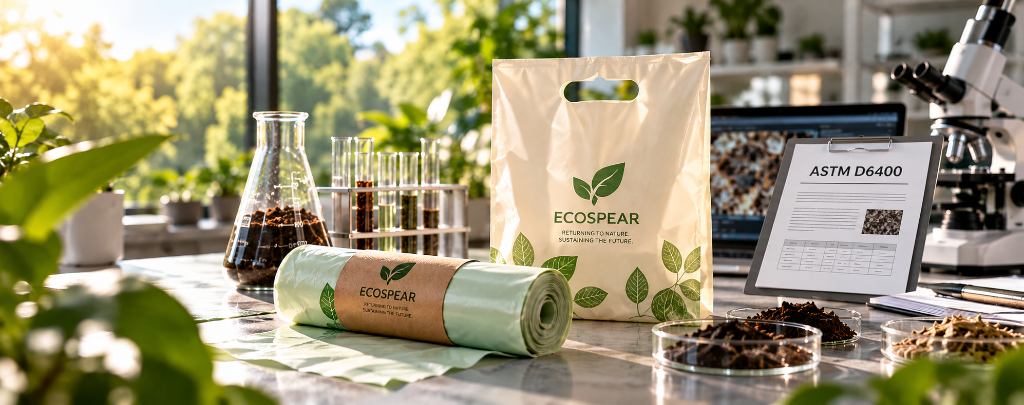
A Quick Answer
ASTM D6400 is an ASTM International specification covering plastics and products made from plastics designed to be composted under aerobic conditions in municipal and industrial composting facilities where thermophilic conditions are achieved. The current active edition is ASTM D6400-26. [ASTM Store] (opens in a new tab)
The specification establishes requirements relevant to identifying materials and finished products, including plastic packaging, as suitable for recovery in those facilities:
- The standard: Defines technical specifications, test limits, and pass/fail thresholds.
- Testing: Evaluates whether specific plastics and formulations meet the defined criteria in accredited laboratories.
- Certification: An independent conformity program (such as BPI) licensing verified products down to the item level.
What Is ASTM D6400?
ASTM D6400 is specifically concerned with plastics and plastic products intended for aerobic composting in municipal and industrial facilities. Its official title is:
“Standard Specification for Labeling of Plastics Designed to be Aerobically Composted in Municipal or Industrial Facilities.”
The current D6400-26 scope explicitly refers to facilities where thermophilic conditions are achieved. [ASTM Store] (opens in a new tab) This makes the standard particularly relevant to compostable plastic packaging, carrier bags, food service wares, and films.
Important distinction: ASTM D6400 does not mean “this plastic will biodegrade anywhere in nature.” The standard’s criteria and claims are strictly tied to a defined aerobic industrial composting pathway.
What Does ASTM D6400 Actually Cover?
The standard is not a single generic claim; it establishes four foundational evaluation pillars governing how plastics perform during aerobic biological recovery:

Disintegration
The product needs to physically break down under the relevant composting conditions (leaving less than 10% of the original dry weight on a 2.0 mm sieve after 12 weeks).
Physical breakdown ensures packaging does not visually contaminate compost.
Biodegradation
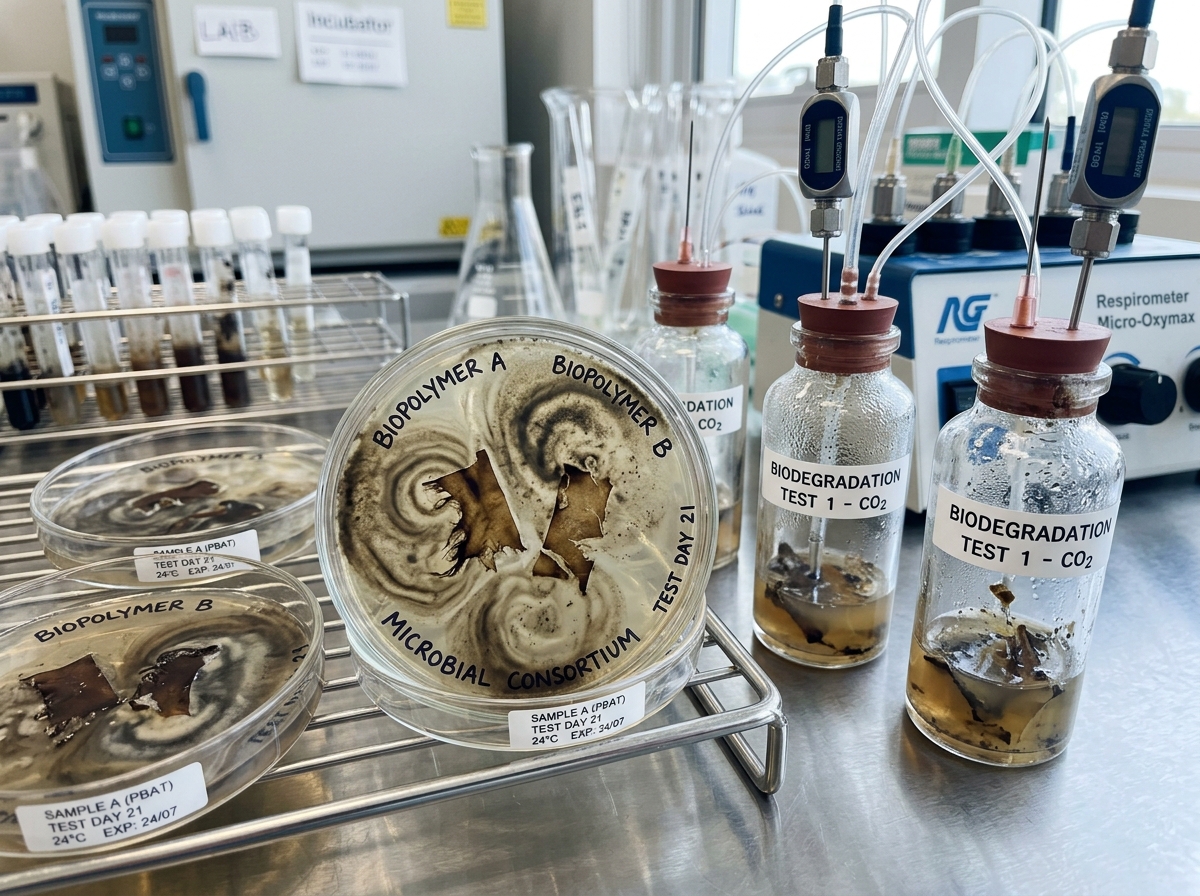
The relevant plastic components must demonstrate biological conversion into carbon dioxide, water, and biomass at rates comparable to known organic materials.
Respirometry measures actual carbon mineralization by microorganisms.
Composting Process & Compost Quality
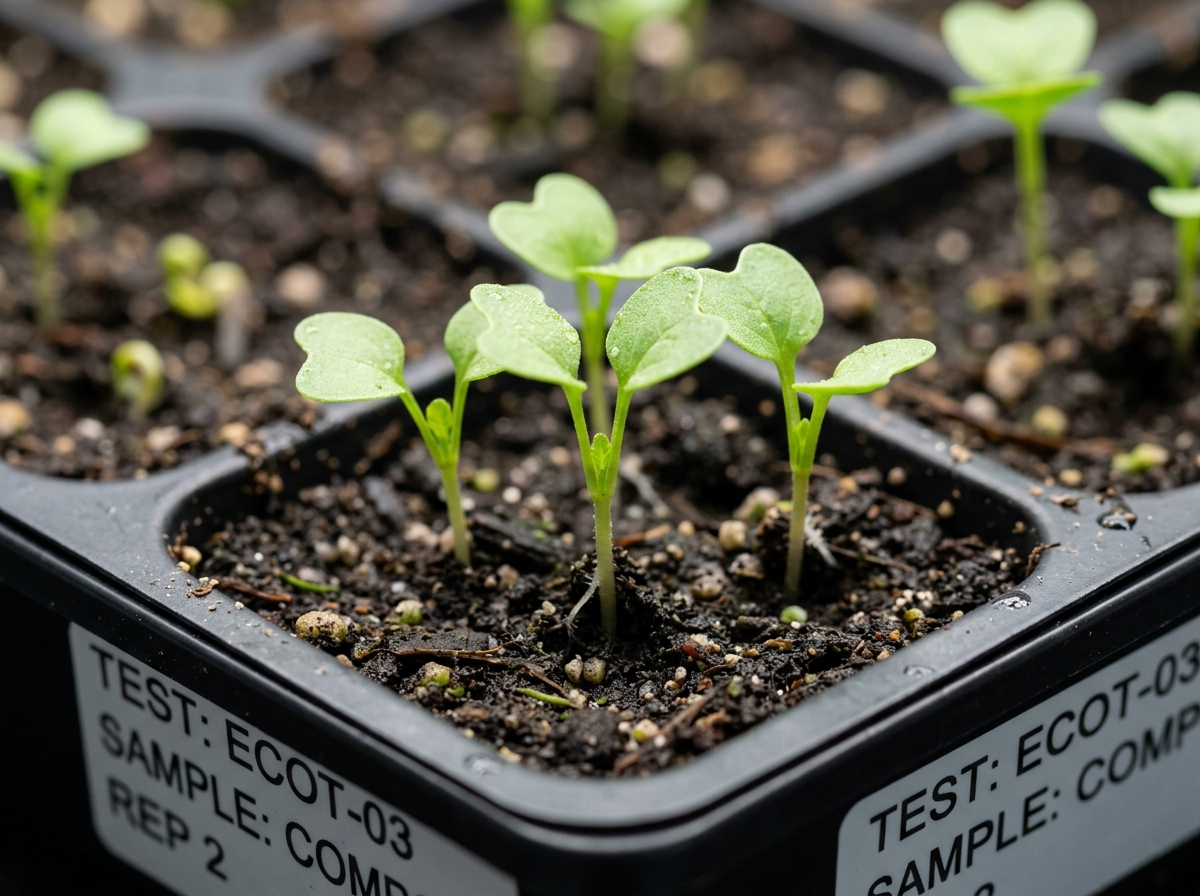
The material should not adversely affect the composting process, and the resulting compost must meet strict limits for regulated heavy metals, PFAS, and plant germination safety.
Compost quality evaluation guarantees soil safety for agriculture.
Product & Material Scope
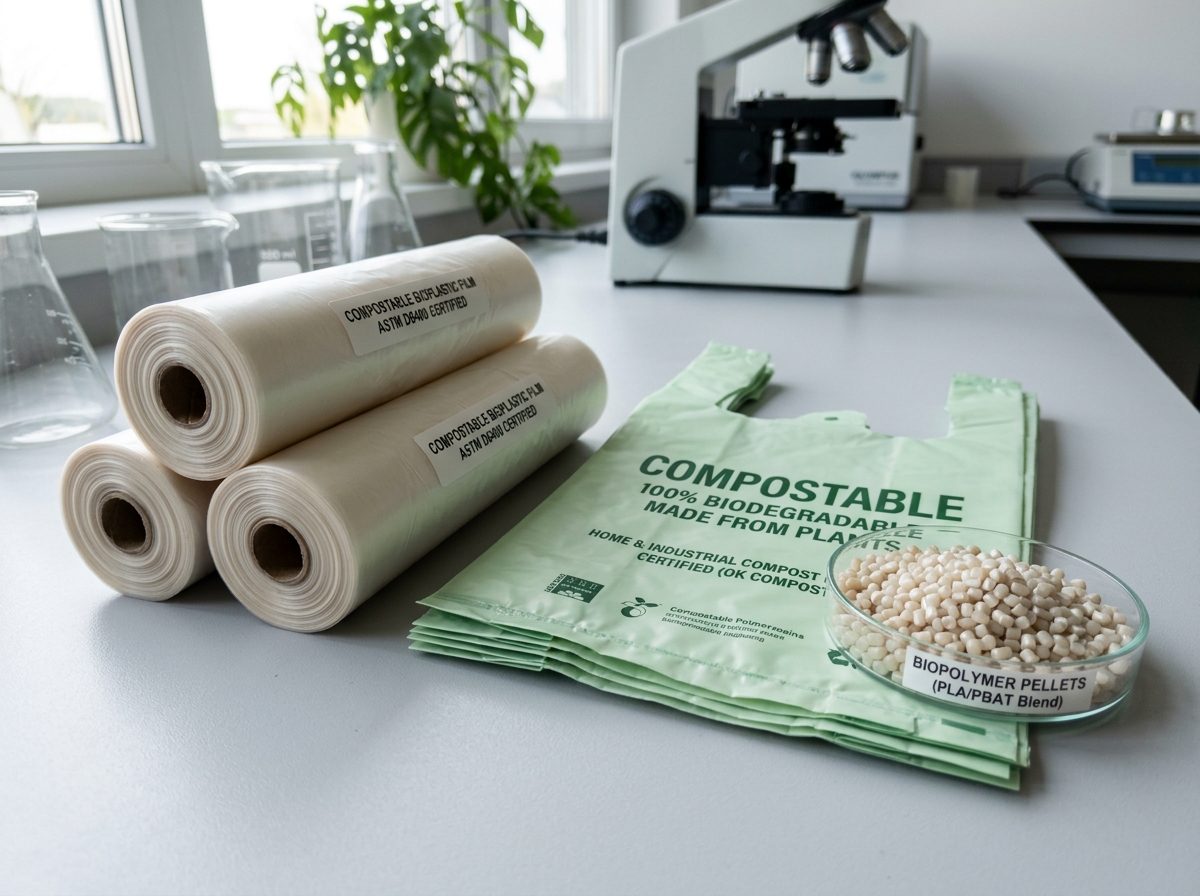
D6400 applies to plastics and products made from plastics, including packaging, designed for the specified aerobic composting environment. [ASTM Store] (opens in a new tab)
Covers monolithic compostable films, carrier bags, liners, and molded items.
What Changed in ASTM D6400-26?
The 2026 revision strengthens key biodegradation requirements and reduces some testing allowances. ASTM D6400-26 is now the current active edition. [ASTM Store] (opens in a new tab)
- Earlier biodegradation testing parameters
- Broader testing allowances for minor additives
- Previously accepted constituent assessment pathway
- Stronger biodegradation rules: Expanded constituent range demonstrating independent biodegradability
- Reduced allowances: Tighter limits on un-tested constituent ratios
- Rigorous technical baseline: Higher assurance for municipal facilities [BPI] (opens in a new tab)
The ASTM D6400 Testing and Evaluation Process
A structured technical sequence connecting raw formulation to certified end-of-life recovery.
Plastic or packaging
Accredited lab tests
Disintegration & bio
Assessed vs D6400
Conformity scheme
Specific SKU scope
ASTM D6400 vs ASTM D6868
D6400 is for plastics and products made from plastics. D6868 is for items incorporating plastics or polymers as coatings/additives on paper and other substrates. [ASTM Store] (opens in a new tab)
| Aspect | ASTM D6400 | ASTM D6868 |
|---|---|---|
| Scope | Plastics and products made from plastics | End items with plastics/polymers on paper or other substrates |
| Typical products | Plastic packaging, bags, liners, films, molded items | Coated paper, cups, fiber-based packaging with plastic layers |
| Composting environment | Municipal/industrial aerobic (thermophilic conditions) | Municipal/industrial aerobic (thermophilic conditions) |
| Focus | Plastic materials and homogeneous plastic products | Multi-material composite packaging items |
ASTM D6400 vs EN 13432 (at a glance)
Both are premier international standards for industrial composting, but they serve different regional standards bodies and regulatory jurisdictions.
| Aspect | ASTM D6400 | EN 13432 |
|---|---|---|
| Standards body | ASTM International (North America / Global) | European Committee for Standardization (CEN) |
| Scope & focus | Plastics designed for aerobic composting | Packaging recoverable through composting |
| Composting context | Municipal & industrial aerobic systems | Industrial / commercial facilities |
| Home compostability | Not automatically established | Not automatically established |
| Common certifications | BPI (Biodegradable Products Institute) | Seedling Logo, DIN-Geprüft, TÜV Austria |
| Primary buyer inquiry | Which BPI certificate and D6400-26 report covers this item? | What lab report and EU certificate license covers this packaging? |
ASTM D6400 Is a Standard — Not a Certification
Suppliers frequently claim “ASTM D6400 certified.” Technically, ASTM develops standard specifications but does not certify products. Third-party certification bodies evaluate products against the standard:
ASTM D6400
Standard / Specification
Defines technical requirements for plastics and plastic products intended for aerobic composting in municipal and industrial facilities.
Certification
(Conformity Evidence)
Provides documented evidence that a specific product has been evaluated against the standard under an applicable scheme. [BPI] (opens in a new tab)
What Buyers Should Ask
Go beyond marketing claims. Ask for clear evidence.
Common Misunderstandings
Clarifying common questions and misconceptions regarding ASTM D6400.
Frequently Asked Questions
Key technical and commercial answers regarding ASTM D6400 compliance.
What is ASTM D6400?
A standard specification published by ASTM International covering plastics and plastic products designed for aerobic composting in municipal and industrial composting facilities. [ASTM Store] (opens in a new tab)
What is the current version of ASTM D6400?
ASTM currently lists ASTM D6400-26 as the active edition, superseding the earlier D6400-23 version. [ASTM Store] (opens in a new tab)
Is ASTM D6400 a certification?
No. It is a technical standard specification. Certification (such as BPI certification) is a separate conformity layer issued by accredited certifying bodies.
What changed in D6400-26?
The 2026 revision strengthens biodegradation requirements, expanding the range of constituents requiring independent biodegradability testing and reducing allowances. [BPI] (opens in a new tab)
Does ASTM D6400 mean home compostable?
No. It specifically addresses municipal and industrial composting facilities under thermophilic temperatures. Home compostability requires separate standards (e.g. NF T51-800 or AS 5810).
Does BPI certification use ASTM D6400?
Yes. BPI states that ASTM D6400 is the base specification for its commercial compostability certification program in North America. [BPI] (opens in a new tab)
Is ASTM D6400 the same as EN 13432?
No. ASTM D6400 is the primary North American specification (ASTM International), while EN 13432 is the European harmonized packaging standard (CEN), though both evaluate industrial composting recovery.
How can I verify an ASTM D6400 claim?
Ask for accredited lab test reports, verify the active edition (D6400-26), check the third-party certification certificate and license registry ID, and confirm that your exact bag gauge and formulation are covered.
The Bottom Line
ASTM D6400 provides a technical framework for evaluating plastics and plastic products designed for aerobic composting in municipal and industrial facilities. The current active edition is D6400-26, and its 2026 revision strengthened biodegradation requirements. [ASTM Store] (opens in a new tab)
For buyers, the important question is not simply: “Does this product say ASTM D6400?” It is: “Which edition, which product, which formulation, what testing, and what third-party evidence support that claim?”
Related Articles

Need compostable packaging for a real-world application?
Understand the science. Verify the evidence. Explore certified commercial packaging including Garbage Bags & Bin Liners and D-Cut Retail Bags.