
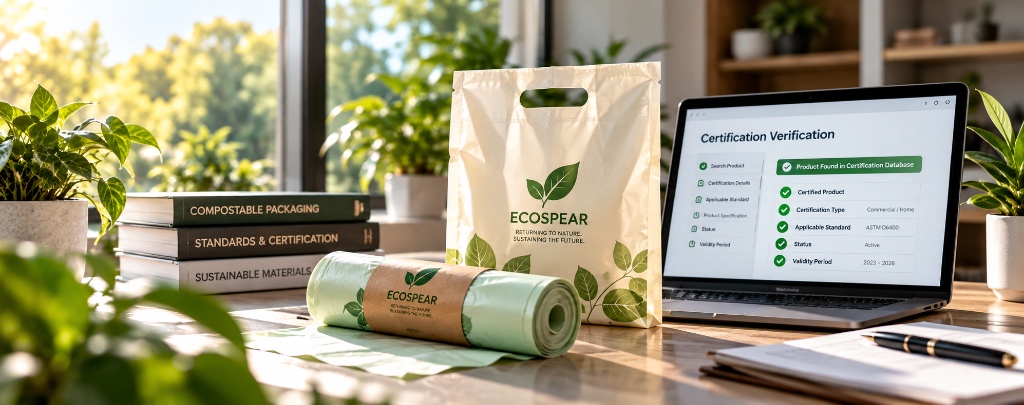
A Quick Answer
BPI certification is a third-party certification program for compostable products in North America. Commercial certification evaluates products for commercial/municipal composting (using ASTM D6400 or ASTM D6868 as base standards), while Commercial & Home certification covers both commercial composting and properly managed home composting. BPI's public catalog lists more than 50,000 certified items, enabling buyers to verify products down to the exact item, formulation, and SKU level.
What Is BPI Certification?
BPI (the Biodegradable Products Institute) operates the leading third-party certification program for compostable products and packaging in North America. BPI evaluates submitted products and formulations against rigorous scientific standards to confirm they safely and completely break down in managed composting systems without leaving persistent synthetic residues or harming compost quality.
Importantly, certification applies to specific products, formulations, and maximum thicknesses — it does not automatically certify every product a company makes. Furthermore, BPI certification is a conformity program that verifies compliance with standards like ASTM D6400; it is distinct from simply stating on a datasheet that a resin meets standard criteria.
What Does BPI Certification Actually Verify?
BPI's certification program evaluates compostable products across four comprehensive technical areas:
Biodegradation
Confirms that organic carbon in the material is consumed by microorganisms and converted into CO₂, water, and biomass at rates compliant with the governing standard.
Disintegration
Verifies that the finished product physically breaks down in the composting environment, leaving less than 10% residue on a 2mm sieve within the required timeframe.
Compost Quality
Ensures the product introduces no toxic heavy metals, synthetic fluorinated compounds (PFAS restrictions), or chemicals that inhibit seedling germination and plant growth.
Formulation & Product Verification
BPI conducts technical reviews of full ingredient formulations, certified maximum thicknesses/grammages, inks, and accredited laboratory test dossiers.
Commercial vs Commercial & Home Certification
BPI offers two distinct certification tiers. The comparison table below highlights the scope and prerequisites for each tier.
| Aspect | Commercial Only | Commercial & Home |
|---|---|---|
| Commercial composting | Yes | Yes |
| Home composting | No | Yes |
| Commercial certification prerequisite | — | Yes (must have BPI commercial certification first) |
| Testing environment | Commercial (Industrial / municipal) | Commercial + Home (Ambient) |
| Appropriate claim | Commercial compostability | Commercial + home compostability |

Testing Duration & Temperature Parameters
Commercial disintegration testing is conducted at 58 ±2°C for up to 84 days, while home disintegration testing uses 25 ±2°C for up to 180 days. Biodegradation testing is conducted for 6 months commercially and 12 months for home certification under respective conditions.
How BPI Certification Relates to ASTM D6400
BPI uses ASTM D6400 as its base standard for commercial compostability certification of plastics and plastic products (with ASTM D6868 and/or D8410 available for fiber and multi-layer items).
A technical specification that establishes laboratory test criteria and pass/fail thresholds for compostable plastics.
A third-party conformity program that reviews laboratory evidence, evaluates formulations, and licenses a product for commercial marketing.
What About Home Compostability?
BPI's Home Compostability Certification, launched in 2025, is based on French standard NF T 51-800. It requires products to hold BPI Commercial Certification as a prerequisite and evaluates products at lower ambient temperatures (25°C) over extended timeframes (up to 180 days for disintegration and 12 months for biodegradation).
Does BPI Certification Apply to Every Product From a Manufacturer?
No. This is one of the most widespread misunderstandings in sustainable packaging procurement. Certification is tied to the individual product, formulation, and certified specification. A manufacturer may have some certified products, but that does not mean all of its products are automatically certified.
How Can Buyers Verify a BPI Claim?
Follow these seven verification checkpoints before accepting a BPI compostability claim:
What BPI Certification Does NOT Mean
Avoid common procurement and marketing misunderstandings:
BPI Certification and Product Thickness / Specification
Disintegration is physically constrained by material thickness. In BPI's evaluation protocol, disintegration testing is performed at the maximum thickness/grammage of the finished product. The tested thickness establishes the absolute certified maximum threshold for the item.
What Buyers Should Ask a Supplier
Key questions for procurement and due diligence teams:
Frequently Asked Questions
Key questions about BPI certification.
?
What is BPI certification?
BPI certification is a third-party conformity program operated by the Biodegradable Products Institute that verifies whether products and packaging meet established scientific compostability criteria for commercial and home environments.
?
How can I verify a BPI certified product?
You can verify products by searching BPI's public online catalog (bpiworld.org) by company name, product category, or SKU number, and requesting the formal certificate documentation.
?
What does BPI certified mean?
It means the specific product has undergone independent laboratory testing and formula verification confirming it will disintegrate and biodegrade in managed composting facilities without leaving toxic residues.
?
Does BPI certification apply to every product from a manufacturer?
No. Certification is issued on an individual product and formula basis. A manufacturer holding certification for one film thickness or product line does not automatically possess certification across other items.
?
Is BPI certification the same as ASTM D6400?
No. ASTM D6400 is the technical standard specification defining pass/fail criteria. BPI certification is the independent licensing and auditing program that verifies compliance with that standard.
?
How long is BPI certification valid?
BPI certificates currently carry a three-year validity period, subject to maintaining active licensing, formulation consistency, and renewal audits.
?
Does BPI certification mean a product is home compostable?
Not automatically. Only products that specifically carry BPI's Commercial & Home certification have been tested for ambient home composting. Commercial Only certification applies solely to industrial facilities.
?
What is the difference between Commercial Only and Commercial & Home?
Commercial Only tests for high-temperature composting (58°C within 84 days). Commercial & Home tests for both commercial facilities and lower-temperature backyard composting (25°C within 180 days).
The Bottom Line
BPI certification provides third-party verification that a specific product has been evaluated under the applicable certification requirements. It is a valuable tool for buyers, but the key question is always: what product, what specification, what certification scope, and what evidence?
Related Articles
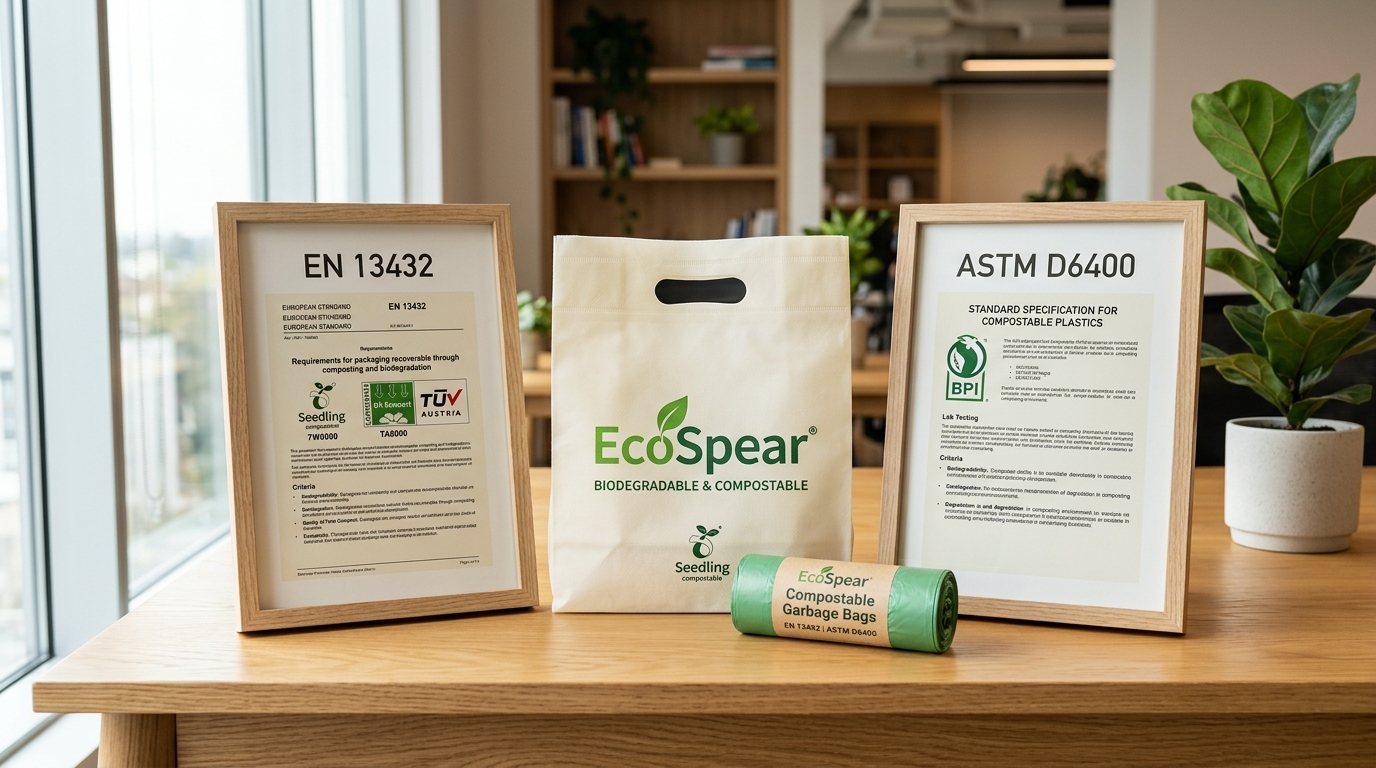
Need compostable packaging for a real-world application?
Understand the science. Verify the evidence. Discover certified commercial packaging including organic waste Garbage Bags & Bin Liners.