
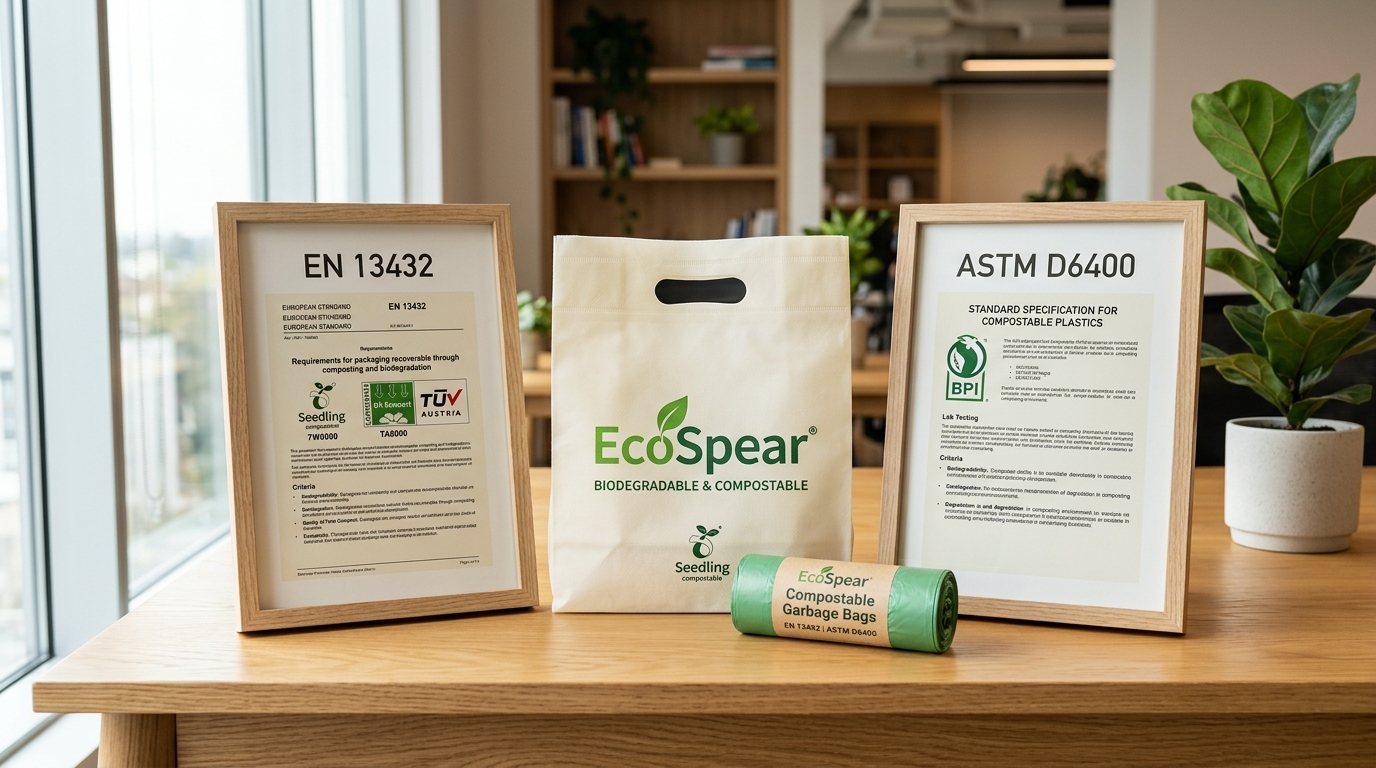
A Quick Answer
EN 13432 and ASTM D6400 are both important international standards for compostable packaging, but they are different standards with different scopes and origins. EN 13432 focuses on packaging recoverable through composting and biodegradation, while ASTM D6400 covers plastics and products made from plastics designed for aerobic composting. Both address composting in controlled industrial or municipal environments, but neither standard automatically means home compostability or product certification.
Why Are These Standards Often Compared?
EN 13432 and ASTM D6400 are often discussed together because both set requirements for compostable materials and products in industrial or commercial composting environments. Many global buyers operate across multiple markets and need to understand how these standards relate, which one applies to their region, and what a claim actually means.
Key Differences at a Glance
While EN 13432 and ASTM D6400 share important similarities, they are not identical. The table below highlights the key structural and regional differences.
| Aspect | EN 13432 | ASTM D6400 |
|---|---|---|
| Standards system | European standard (CEN) | ASTM International standard |
| Primary focus | Packaging recoverable through composting & biodegradation | Plastics and products made from plastics |
| Product scope | Packaging (e.g. bags, films, food packaging) | Plastics and plastic products (including packaging) |
| Composting environment | Industrial / commercial composting | Municipal / industrial aerobic composting (thermophilic) |
| Home compostability | Not automatically established | Not automatically established |
| Certification | Separate certification schemes | Separate certification schemes (e.g. BPI uses D6400) |
| Main regions | Europe and many global markets | U.S., North America & global markets |

Different standards.
A cleaner planet.
Both standards support diversion of organic waste to managed composting infrastructure.
Are They Testing the Same Things?
EN 13432 and ASTM D6400 evaluate similar core aspects of compostability, such as disintegration, biodegradation and the impact on the composting process. However, they use different test methods, detailing and acceptance criteria, and their scopes are not identical.
Disintegration
The product must break down under the relevant composting conditions (leaving <10% residue >2mm in 12 weeks).
Biodegradation
The material must biodegrade within the applicable test framework (measuring actual microbial carbon conversion).
Composting Process & Quality
The material should not negatively affect the composting process or resulting compost quality (ecotoxicity and plant growth).
Scope & Product Type
EN 13432 focuses on packaging. ASTM D6400 covers plastics and plastic products, including packaging.
Industrial Composting: The Common Ground
Both EN 13432 and ASTM D6400 are designed for controlled aerobic composting environments, typically industrial or municipal facilities. They are not home compostability standards.

What Neither Standard Means
It's important to understand what EN 13432 and ASTM D6400 do not mean:
Standard vs Certification
EN 13432 and ASTM D6400 are standards, not certifications.
Defines the technical requirements that a product or material must meet in accredited laboratory testing.
An independent process and licensing scheme that provides verifiable third-party evidence that a specific product has been evaluated against a standard.
Which One Matters for Your Market?
The relevant standard depends on your market, regulations and customer requirements.
European Procurement
EN 13432 is widely referenced for compostable packaging in Europe under CEN harmonization.
U.S. / North American
ASTM D6400 is commonly used and recognized across the U.S. and North American municipal programs.
Multinational Sourcing
Buyers may need to consider both standards, depending on destination markets and distribution channels.
Always Verify
Confirm which standard applies to your target market and request product-specific lab test evidence.
How Buyers Should Verify a Claim
Key verification checkpoints for procurement teams:
Common Misunderstandings
Clarifying common questions about EN 13432 and ASTM D6400:
Frequently Asked Questions
Key technical and commercial answers comparing EN 13432 and ASTM D6400.
?
What is the main difference between EN 13432 and ASTM D6400?
EN 13432 is a European harmonized standard focused specifically on packaging recoverable through composting, while ASTM D6400 is an ASTM International specification covering plastics and products made from plastics designed for aerobic composting.
?
Are they certifications or standards?
Both are standard specifications. Neither standard certifies products directly. Independent certifying bodies (such as TÜV Austria, DIN CERTCO, or BPI) issue certifications and licensing marks against these standards.
?
Which standard should I use for my market?
Use EN 13432 if your packaging is destined for the European Union or markets requiring CEN harmonization. Use ASTM D6400 (and BPI certification) for North American markets. Multinational brands frequently verify formulations against both.
?
Can a product be certified to both EN 13432 and ASTM D6400?
Yes. High-quality compostable resin compounds (such as EcoSpear PBAT/PLA/cornstarch blends) can be tested and certified to comply with both EN 13432 and ASTM D6400 to facilitate global distribution.
?
Are EN 13432 and ASTM D6400 testing the same things?
They evaluate the same four core criteria (biodegradation, disintegration, compost quality/ecotoxicity, and material safety), but differ in exact test methods, reference allowances, and constituent evaluation rules.
?
Which standard is more widely accepted globally?
Both are globally recognized benchmarks. EN 13432 forms the foundation for ISO 17088 and European national regulations, while ASTM D6400 serves as the primary technical specification across North America.
?
Do these standards mean home compostable?
No. Both standards explicitly evaluate thermophilic industrial and municipal composting conditions (55°C–60°C). Home compostability requires separate ambient temperature standards (e.g., NF T51-800 or AS 5810).
?
How can I verify a supplier's claim?
Request accredited laboratory test reports, check the active certificate registration on public certifier databases (e.g. TÜV Austria, DIN CERTCO, BPI), and ensure your exact bag thickness and formulation are covered.
The Bottom Line
EN 13432 and ASTM D6400 are both important standards for compostable packaging, but they are different standards with different scopes and origins. Both address compostability in controlled industrial or municipal environments. For buyers, the key is to understand which standard applies to your market and to verify the specific product, formulation, testing and certification evidence behind any claim.
Related Articles
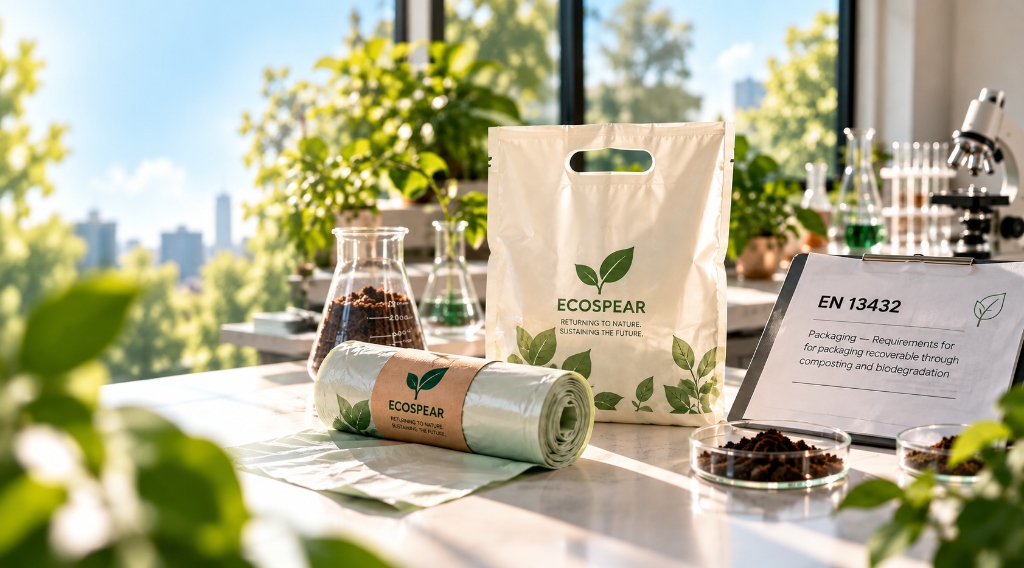
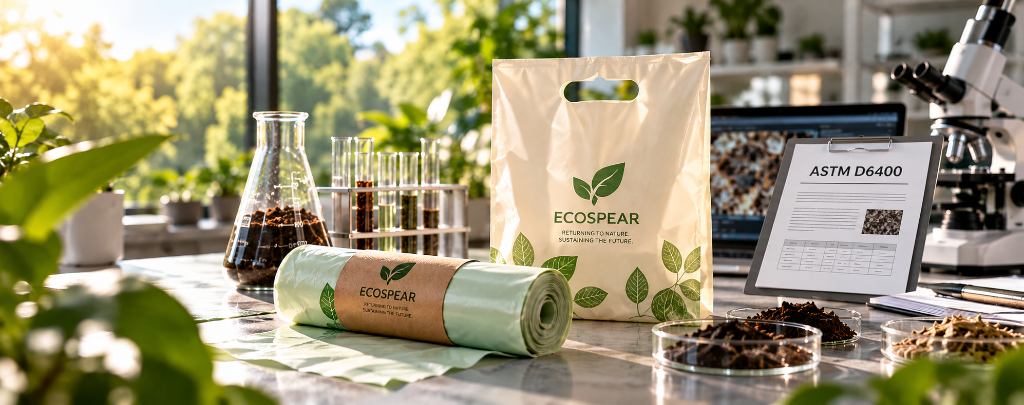

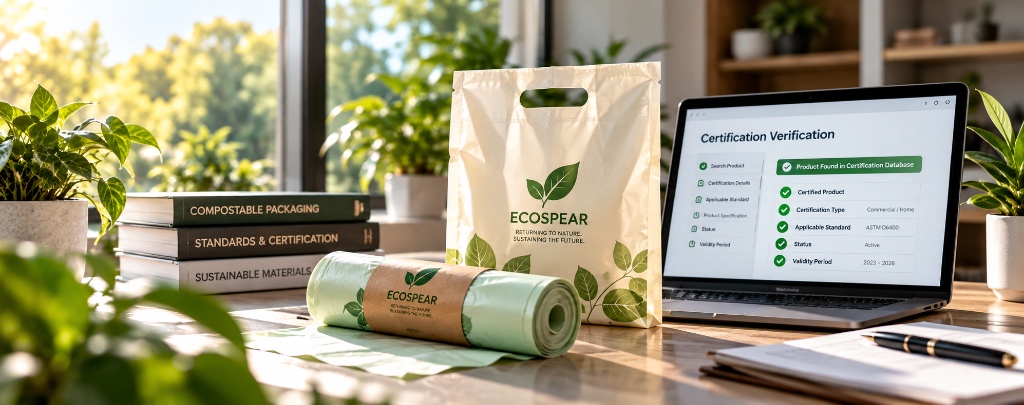
Need compostable packaging for a real-world application?
Understand the science. Verify the evidence. Explore compliant solutions across our Solutions Catalog and high-volume T-Shirt Bags.