
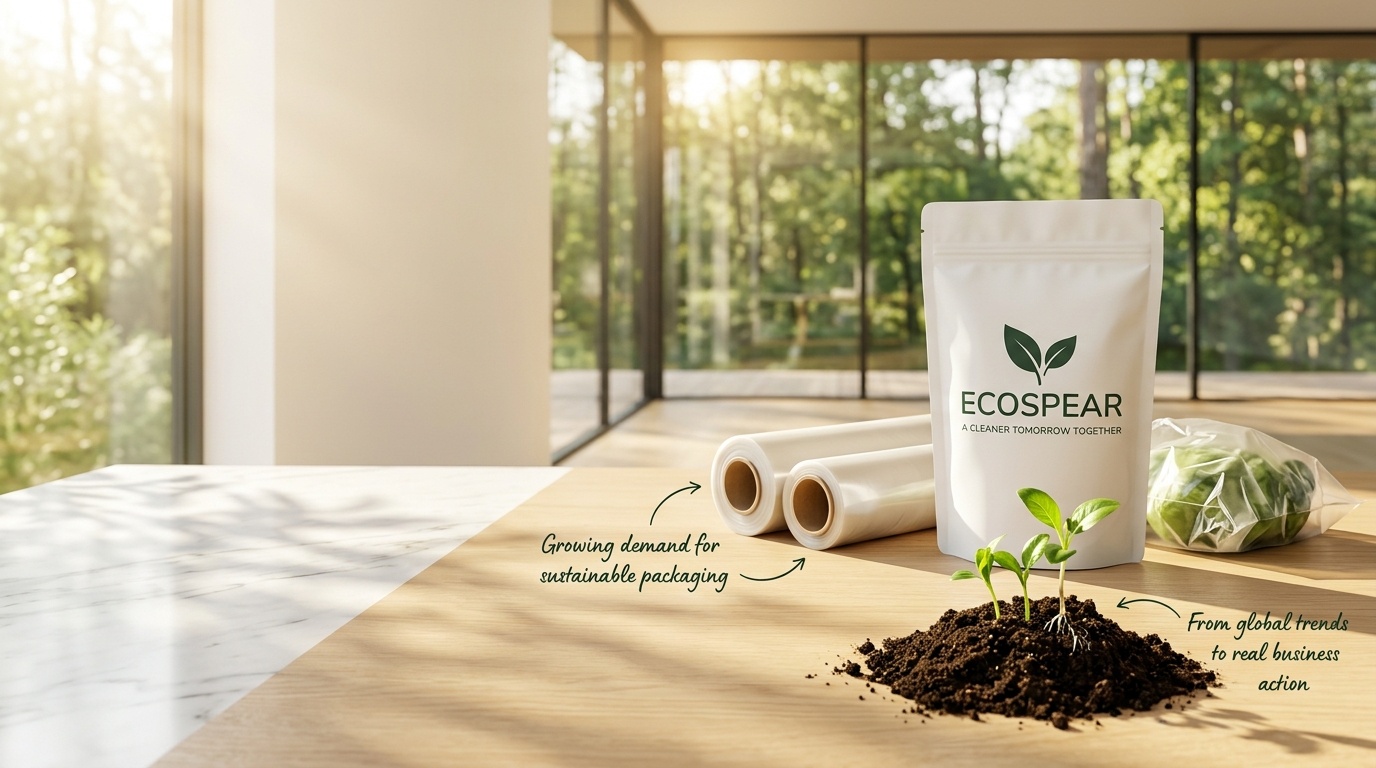
Introduction: A Market Moving Beyond Material Substitution
Compostable packaging is attracting attention from manufacturers, retailers, food-service businesses, consumer brands, and sustainability teams worldwide. But the market is evolving in a more complex way than simply replacing conventional plastic with a material labelled compostable.
Regulatory changes, material innovation, buyer expectations, waste-management infrastructure, and growing scrutiny of environmental claims are influencing how businesses evaluate packaging.
For some applications, compostable packaging may offer a useful option. For others, reuse, packaging reduction, or recyclable materials may be more appropriate. The right decision depends on the application, the evidence supporting the product’s claims, and what happens to the packaging after use.
This guide explores the global trends shaping compostable packaging in 2026, what they mean for businesses, and how organisations can make better-informed packaging decisions.
The future of compostable packaging will depend not only on material innovation, but also on credible evidence, appropriate applications, practical end-of-life systems, and commercial performance.
Executive Summary
Six key trends are shaping the global compostable packaging market. Understanding these developments helps businesses evaluate opportunities, manage risks and make informed packaging decisions.
Regulation is becoming more influential.
Bioplastics capacity is expanding.
Application-specific selection is essential.
Certification and documentation matter more.
Waste-management infrastructure remains a key factor.
The strongest packaging strategies use multiple approaches.
Global Market Development: Growth, but Not a Single Story
Interest in compostable packaging is part of a wider shift in plastics and packaging. However, it is important to distinguish the market for compostable packaging from the broader bioplastics industry.
Bioplastics include materials that are biobased, biodegradable, or both. Not all bioplastics are compostable, and not all compostable plastics are entirely biobased.
What the industry data show
European Bioplastics’ 2025 market update estimates that global biobased-plastics production capacity was approximately 2.31 million tonnes in 2025, with capacity projected to reach about 4.69 million tonnes by 2030.
The same update identifies packaging as the largest application segment in its reported bioplastics market, accounting for 41.3% in 2025.
These figures indicate the scale of development in biobased plastics. They should not be interpreted as the size or growth rate of the compostable-packaging market specifically. The distinction matters because businesses need data that match the products they are evaluating, not statistics from a broader market presented as if they describe one material category.
Based on European Bioplastics 2025 market data. Figures show global biobased-plastics production capacity, not the size of the compostable-packaging market.
What this means for businesses
Three practical implications follow:
- More material options may become available: Expanding production capacity can support the development and commercialisation of different polymer families.
- Supply and commercial readiness still matter: Announced capacity does not guarantee that every grade, formulation, or finished packaging product is readily available at the required cost and quality.
- Market growth does not establish product suitability: A growing industry does not prove that a particular compostable product is appropriate for a given application or disposal system.
Regulation Is Reshaping Packaging Decisions
Packaging rules, environmental claims and waste-management responsibilities are influencing material choices worldwide.
One of the most important global developments is the increasing role of packaging policy in business decisions. Regulations differ between markets, but businesses selling internationally must increasingly understand packaging requirements, product claims, waste-management responsibilities, and the evidence needed to support their environmental statements.
Europe’s packaging framework (PPWR)
The European Union's Packaging and Packaging Waste Regulation (PPWR) began applying on 12 August 2026. It establishes a common framework intended to reduce packaging waste and improve circularity across the EU. Its wider direction includes packaging design, recyclability, waste reduction, reuse, recycled content, and clearer information for waste sorting. Specific obligations and implementation dates vary by requirement.
This development is important for manufacturers and exporters because packaging decisions must be evaluated against the requirements applicable to the actual product and market.

Why this matters beyond Europe
International brands and their suppliers often need to serve buyers across several markets. That creates a practical need to understand the destination market before finalising a material, product claim, label, or technical specification. A packaging solution suitable for one buyer or market should not automatically be assumed suitable for another.
Material Innovation Is Expanding the Options
Different polymer families offer different properties and opportunities. No single material is suitable for every application.
Material development is an important part of the changing packaging landscape. Different polymer families and material formulations offer different combinations of flexibility, strength, processing behaviour, barrier properties, and end-of-life characteristics.
However, the term bioplastics covers several distinct categories. Understanding those differences is essential when evaluating the market.
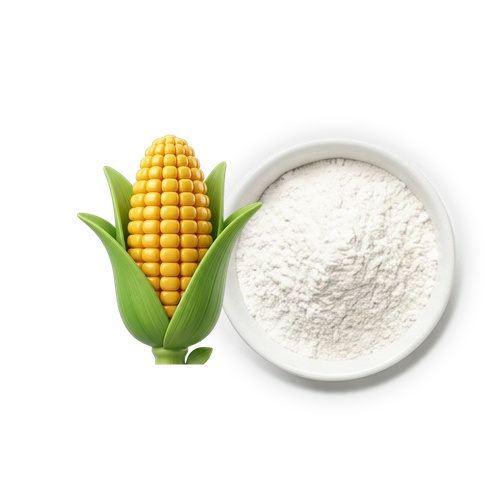
Starch-based materials
Used in selected packaging formulations. Properties depend on composition and design.

PLA
Relevant for various packaging applications. Suitability depends on grade and end-of-life environment.

PBAT
A flexible polymer used in certain biodegradable and compostable formulations.
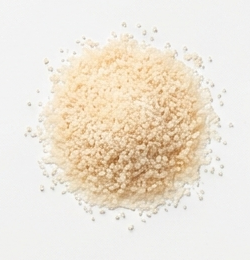
PHA
A family of polymers with different properties and potential applications.
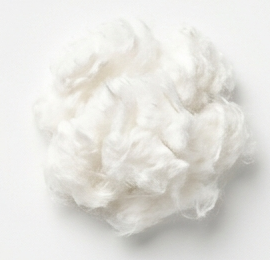
Cellulose-based materials
Used in films, coatings and other applications. Performance depends on construction and additives.
For a deep scientific explanation of these polymer families, read our dedicated technical guide: Bio-Based Polymers for Flexible Packaging: Materials, Performance and Trade-Offs.
Certification and Transparency Are Becoming Business Priorities
As environmental claims receive greater scrutiny, packaging buyers need more than a supplier’s general statement that a product is green, biodegradable, or compostable. They need to understand exactly what the claim means and what evidence supports it.
Standards
Define specifications, criteria, and assessment procedures for a particular purpose (e.g. EN 13432 or ASTM D6400).
Testing
Provides empirical laboratory records measuring material performance under specified methods and conditions.
Certification
Involves third-party assessment under a verified scheme by an accredited body (e.g. TÜV AUSTRIA, BPI).
Why product-level evidence matters
The evidence for a raw material may not automatically cover the finished packaging product. Formulations, coatings, additives, printing inks, thickness, and construction can fundamentally alter the characteristics of the final product. Buyers should therefore verify the exact scope of the documentation they receive.
End-of-Life Infrastructure Will Shape Adoption
Compostable packaging can only fulfill its intended role when the right systems are in place.
A compostable product is designed for a particular end-of-life pathway. Whether that pathway is available in practice can be as important as the material’s properties.
Industrial composting and home composting are not the same environment. They can differ in temperature, moisture, microbial activity, process control, and operating conditions. Likewise, a product intended for composting should not automatically be placed in a conventional recycling stream.
Compostable Packaging Must Compete on Practical Performance
Environmental considerations are important, but packaging still has a commercial job to do. A bag or film must perform in its intended application. It may need to carry a specified load, resist puncture, remain flexible, seal correctly, protect its contents, and work with existing production or handling processes.
Use this checklist when evaluating compostable packaging options from suppliers:
A more useful way to compare options
| Decision Factor | What Buyers Should Establish |
|---|---|
| Application | Intended use, contents, product weight, handling conditions, and shelf life requirements. |
| Performance | Tensile strength, dart drop resistance, flexibility, moisture/gas barrier needs, and sealing behaviour. |
| Evidence | Relevant technical specifications, accredited laboratory test reports, and valid certification records. |
| End-of-life | Appropriate recovery pathway (home composting, industrial facility) and real-world local availability. |
The Next Phase: Application-Specific Packaging Strategies
The global packaging market is moving past the stage where businesses treat sustainable packaging as a single, uniform solution. The strongest packaging strategies recognize that reduction, reuse, recycling, and composting all have roles to play.
Five critical questions for packaging teams
Is compostable packaging the most appropriate solution for this specific product, or is reduction, reuse, or recycling more suitable?
What are the packaging regulations, EPR obligations, and environmental claims standards in the destination market?
Does the material meet the physical and operational performance requirements of the product, distribution chain, and consumer experience?
What specific evidence supports the product's environmental claims, and does that evidence cover the actual finished item?
Is the intended disposal pathway available and accessible to the consumers who will use this packaging in their everyday life?
How Ecospear Can Help Businesses Evaluate Packaging Options
Global packaging trends create opportunities, but they also make material selection more demanding. Businesses must balance application requirements, performance, documentation, market expectations, and end-of-life considerations.
Ecospear manufactures sustainable packaging, including biodegradable and compostable bag solutions. We can discuss your intended application, relevant product options, specifications, and the supporting documentation available for evaluation.
Talk to Ecospear's Technical Team
Get expert guidance on certified compostable flexible packaging, specifications, and regulatory documentation.
Conclusion: Navigating the Market in 2026
The global compostable packaging market is developing rapidly, but its trajectory is more nuanced than early projections suggested.
Growth is real, but it is accompanied by greater regulatory scrutiny, clearer performance demands, and a stronger emphasis on practical end-of-life systems.
For businesses, the priority is not simply to adopt compostable packaging, but to adopt it thoughtfully—where it performs a clear function, meets relevant regulatory standards, and aligns with the waste-management realities of the target market.
By focusing on application suitability, rigorous evidence, and realistic end-of-life pathways, organisations can make packaging choices that meet commercial needs and stand up to stakeholder scrutiny.
References and Further Reading
- European Bioplastics — Bioplastics Market Development Update 2025
- European Commission — Packaging and Packaging Waste Regulation (PPWR)
- European Commission — EU Policy Framework on Bio-based, Biodegradable and Compostable Plastics
- European Union — Regulation (EU) 2025/40 on packaging and packaging waste
- OECD — Global Plastics Outlook: Economic Drivers, Environmental Impacts and Policy Options
- Relevant technical standards and product-specific certification documentation (EN 13432, ASTM D6400, ISO 17088)
Editorial Note: Market data, production forecasts, and regulatory requirements are subject to evolving market conditions, official updates, and local statutory implementation. Exporters and brand owners should verify current specifications and accredited testing dossiers before manufacturing.
Last reviewed: October 2026 • Published by ECOSPEAR Market Intelligence Team