
Executive Summary
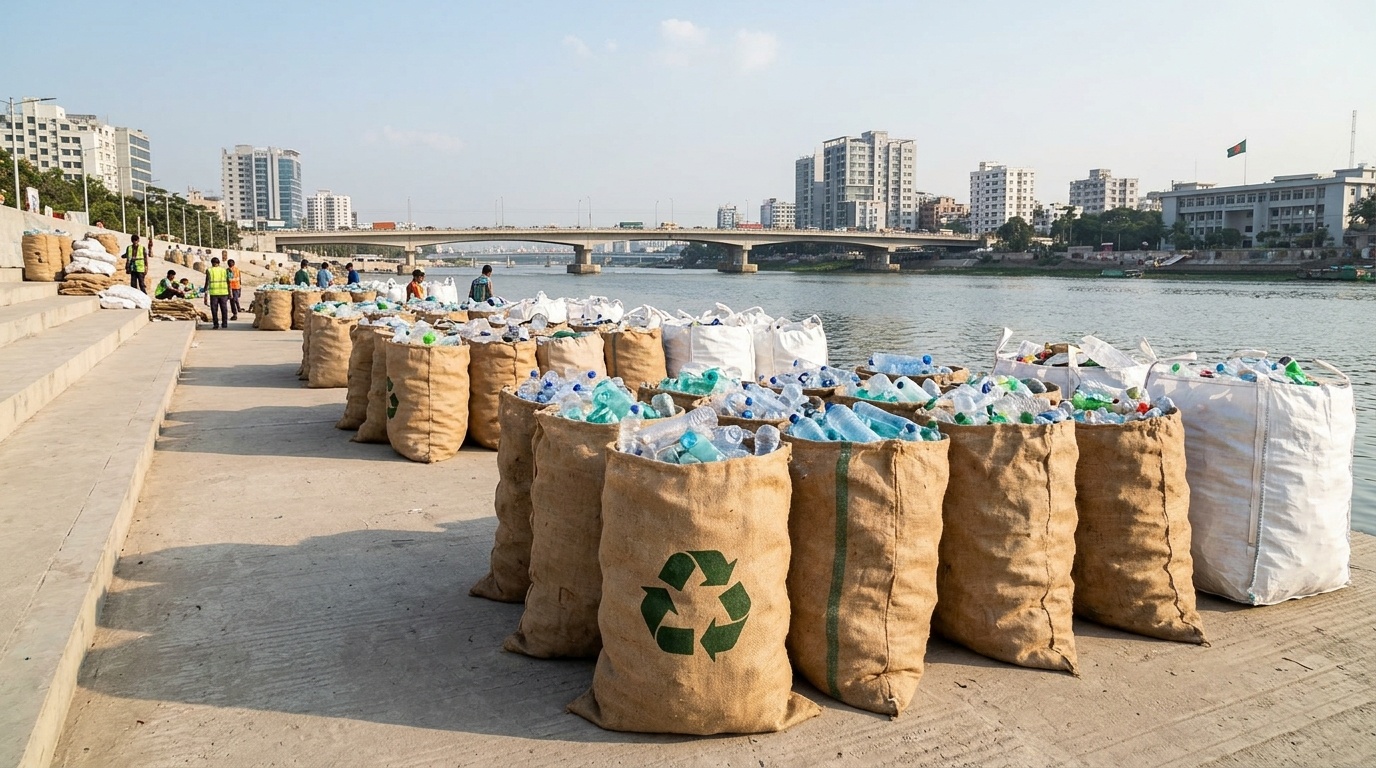
Bangladesh’s 2026 EPR guidelines establish a framework for post-consumer plastic-waste management, setting responsibilities for manufacturers, importers and brand owners, classifying covered plastic products into five categories, and introducing phased registration and collection and recycling targets.
Producer responsibility
Relevant manufacturers, importers and brand owners.
Five product categories
Rigid, flexible, EPS, single-use and other specified products.
Phased implementation
Large, medium and small enterprises.
Targets
15% collection and 7.5% recycling, increasing to 30% and 15%.
Individual or collective
Responsibilities can be fulfilled individually or through a PRO.
What Is Extended Producer Responsibility (EPR)?
Extended Producer Responsibility (EPR) is a policy approach that makes producers responsible for specified aspects of the post-consumer management of their products. Under this framework, manufacturers, importers and brand owners may be required to support the collection, recycling and proper management of plastic products after use.
Historically, municipal authorities and municipal budgets bore the entire operational and economic burden of plastic waste collection, sorting, and disposal. Under the 2026 guidelines, environmental responsibility moves upstream: businesses that introduce plastic packaging into the commercial stream must take financial and physical responsibility for its end-of-life recovery.
Produce
Manufacturers, importers and brand owners.
Use
Products sold to consumers and retail users.
Collect & Recycle
Producer-supported waste management and recycling.
Circular Economy
Less plastic waste and more material recovery.
What Does Bangladesh’s 2026 EPR Framework Cover?
The guidelines apply to covered recyclable and non-recyclable plastic products manufactured or used in Bangladesh. They classify plastic products into five categories:
Rigid plastics
Rigid containers and other hard plastic products.
Flexible plastics
Plastic films, bags and other flexible formats.
Expanded polystyrene (EPS)
Styrofoam and EPS packaging.
Certain single-use plastic products
Specified single-use items not prohibited by law.
Other specified products
e.g. sanitary napkins, diapers and cigarette filters.
Implementation Timeline
The Department of Environment will identify obligated entities in stages according to enterprise size.
Large industrial establishments
National FMCG brands, large packaging mills, and major chemical/plastic converters.
Medium-sized enterprises
Mid-tier manufacturing facilities, regional food processors, and medium brand owners.
Small industrial enterprises
Small plastic packaging producers, commercial suppliers, and local distributors.
Collection and Recycling Targets
The guidelines set minimum targets for obligated entities, increasing over time.
| Target | Initial period | Subsequent period |
|---|---|---|
| Waste collection | At least 15% | At least 30% |
| Waste recycling | At least 7.5% | At least 15% |
The Ministry has stated that these targets may be updated following three years of experience and consultation with stakeholders. The exact calculation basis and reporting requirements should be confirmed from the official guidelines.
Obligated entities should note that waste collection and waste recycling are distinct statutory requirements. Collecting plastic waste without channelling it into verified recycling facilities does not satisfy recycling quotas. Documentation must verify physical mechanical or chemical reprocessing into secondary raw materials.
Who Needs to Pay Attention?
The regulatory scope covers three core groups of commercial economic operators operating within Bangladesh:
Packaging Converters
Domestic producers of virgin or recycled plastic films, poly bags, rigid bottles, thermoformed trays, and cushioning foam.
Brand Owners & FMCG
Enterprises packaging food, beverages, personal care, retail, or industrial commodities for commercial sale in Bangladesh.
Commercial Importers
Businesses importing packaged goods or pre-formed plastic containers into Bangladesh for domestic distribution.
Collective Implementation Through a Producer Responsibility Organization (PRO)
Obligated businesses are not required to build individual, parallel reverse-logistics collection fleets from scratch. The 2026 guidelines formally sanction two distinct routes to compliance:
Individual EPR Model
An enterprise establishes its own take-back schemes, buy-back depots, and dedicated recycling contracts. This model is most practical for closed-loop B2B industrial packaging, reusable crates, and bulk containers.
Collective PRO Model
Enterprises join or co-found a licensed Producer Responsibility Organization (PRO). The PRO pools industry fees to finance municipal collection networks, formalize informal waste pickers, and contract certified recyclers to fulfill quotas on behalf of all member brands.
Regardless of the chosen pathway, all collection certificates and recycling volume records must be digitally verifiable and subject to annual auditing to prevent duplicate counting.
Implications for the Packaging Industry
The rollout of EPR in Bangladesh introduces profound commercial shifts across the industrial packaging sector:
1. Acceleration of Mono-Material Designs
Multi-layer laminate films (e.g. metallized plastic sachets) are virtually impossible to recycle mechanically and will face higher collection difficulty fees. Brands are shifting toward recyclable mono-PE or mono-PP flexible structures.
2. Incorporation of Post-Consumer Recycled (PCR) Content
To stimulate domestic recycling demand, brands will increasingly mandate certified PCR resins in secondary and tertiary packaging wraps, creating reliable off-take markets for local recyclers.
3. Formalization of the Informal Waste Sector
Bangladesh's extensive network of informal waste collectors (Tokais) and scrap dealers (Bhangari shops) will be progressively integrated into registered supply chains through PRO-supported aggregation centers.
How Ecospear Can Help Businesses Navigate Packaging Changes
As businesses evaluate their packaging strategies in response to Bangladesh’s evolving plastic-waste framework, choosing the right packaging partner becomes increasingly important.
Ecospear works in sustainable packaging, with a focus on biodegradable and compostable bag solutions. We believe that packaging decisions should be guided by the intended application, material performance, credible technical evidence and a clear understanding of end-of-life considerations.
For businesses reviewing their packaging portfolios, Ecospear can support the conversation in several ways:
1. Evaluate alternatives for selected packaging applications
Businesses can discuss whether biodegradable or compostable bag solutions are appropriate for particular applications within their packaging portfolio. The suitability of any alternative depends on the product’s requirements, applicable standards, supporting evidence and available end-of-life systems.
2. Make more informed material decisions
Choosing a packaging material involves more than comparing environmental claims. Businesses should consider functional performance, material composition, applicable regulatory requirements and the conditions under which the packaging is intended to be managed after use. Ecospear can help customers understand the packaging options it offers and the relevant technical information available for those products.
3. Support packaging reviews and procurement discussions
Retailers, brands and other businesses can engage Ecospear to discuss their existing bag requirements, intended applications and potential sustainable-packaging alternatives. These conversations can help establish which options warrant further technical and commercial evaluation.
4. Approach sustainability claims with greater care
Businesses should not assume that a product described as biodegradable or compostable automatically fulfils every regulatory obligation or is suitable for every waste-management system. Ecospear’s approach is to treat material characteristics, supporting documentation and intended end-of-life conditions as important parts of the packaging discussion.
EPR compliance and packaging selection are related, but they are not the same thing.
Businesses must determine their legal obligations under the applicable guidelines. Selecting a different packaging material does not, by itself, establish compliance with registration, collection, recycling, reporting or other applicable requirements.
Ecospear’s role is to help businesses explore suitable packaging options—not to replace regulatory advice or the waste-management systems required to fulfil their obligations.
Reviewing your packaging?
If your business is evaluating bag requirements or exploring sustainable-packaging alternatives, speak with Ecospear about your application and technical requirements.
Does EPR Mean Switching to Compostable Packaging?
No. Extended Producer Responsibility is fundamentally material-neutral. Its overarching purpose is to collect and recycle conventional plastic materials, not to mandate an indiscriminate transition to bioplastics.
Where Do Compostable Materials Truly Fit?
Certified compostable polymers (such as starch-based resins and PLA compliant with EN 13432 or ISO 17088) serve a highly specific, strategic role: applications where severe organic or food contamination prevents clean mechanical recycling.
- Wet food takeaway containers, fruit produce bags, and organic bio-waste collection liners.
- Agricultural mulch films that can be ploughed directly into the soil after the harvest cycle.
- High-contamination catering and hospitality disposables where food residue cannot be cleanly washed.
Crucially, certified compostables must never be mixed into conventional polyethylene recycling bins, as they can disrupt mechanical plastic reprocessing.
Practical Business Checklist
To prepare for phased Department of Environment notification and meet compliance obligations seamlessly, enterprises should execute this five-point roadmap:
Enterprise EPR Preparedness Checklist
- 1. Complete a Baseline Plastic Inventory: Audit total annual plastic consumption and categorize materials into the 5 designated regulatory categories (rigid, flexible, EPS, single-use, other).
- 2. Determine Enterprise Tier: Review annual turnover and production capacity against the Department of Environment's enterprise size definitions (Years 1–2, Years 3–4, or Year 5).
- 3. Evaluate Compliance Mechanisms: Weigh the operational feasibility of in-house individual take-back schemes versus joining a registered collective Producer Responsibility Organization (PRO).
- 4. Redesign for Enhanced Recyclability: Work with converters to transition hard-to-recycle multi-material pouches to mono-PE or mono-PP flexible films to lower downstream recovery costs.
- 5. Establish Digital Traceability: Ensure all waste collection receipts, weighbridge slips, and recycling certificates are certified and auditable for annual Department of Environment filings.
Conclusion & Strategic Outlook
The introduction of Bangladesh's 2026 Plastic Waste EPR Guidelines represents a historic evolution in national environmental governance. Packaging can no longer be evaluated merely as a disposable logistical cost; it is now an ongoing material liability with measurable legal and financial obligations.
Forward-thinking brands and manufacturers who act early—by auditing packaging formulations, supporting domestic collection networks, and partnering with qualified recyclers—will secure substantial competitive advantages, protect their brand reputation, and ensure uninterrupted market access.
Official Regulatory References
For official statutory documents, gazette notifications, and Department of Environment implementation orders, consult the following government resources:
Ministry of Environment, Forest and Climate Change: EPR Guidelines on Plastic Waste Management, 2026
National policy announcement and executive framework governing post-consumer plastic management.
Bangladesh Gazette, 13 August 2026 (S.R.O. No. 293-Law/2026)
Statutory Regulatory Order publishing the official EPR rules and compliance targets.
Department of Environment: Implementation Notices
Regulatory guidelines, enterprise category schedules, and registration protocols.