
Executive Summary
Bio-based polymers are expanding the possibilities for flexible packaging, but their performance, end-of-life behaviour and commercial suitability vary. Understanding the differences is essential for making informed packaging decisions.
Bio-based origin
Made from renewable biological resources.
Different properties
Not all bio-based materials are biodegradable or compostable.
Performance matters
Strength, barrier properties and processability vary by material and application.
End-of-life context
Requires proper conditions and waste-management infrastructure.
Evidence selection
Choose based on technical data, standards and intended use.
What Are Bio-Based Polymers?
Bio-based polymers are made wholly or partly from biological resources such as starch, sugars, cellulose or vegetable oils. The term describes the origin of the material, not necessarily what happens to it after use.
Describes feedstock provenance. The carbon in the polymer chain originates from renewable biological biomass (corn, cassava, sugar cane, forestry residues) rather than fossil hydrocarbons.
Describes a natural biological process where microorganisms metabolize the polymer into water, CO₂, and biomass under specific environmental conditions over time.
Describes verified degradation within managed composting environments (industrial or home) within certified statutory timeframes, with zero ecotoxicity or toxic residue.
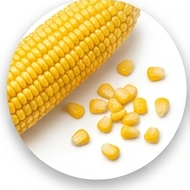 Starch
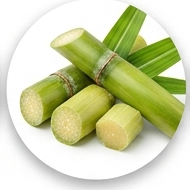 Sugars
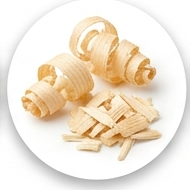 Cellulose
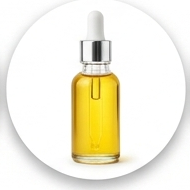 Plant Oils
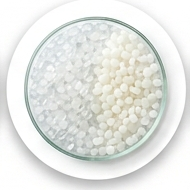 Polymer Production
Resin pellets & blends
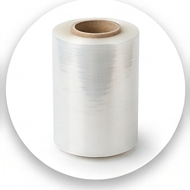 Film Extrusion
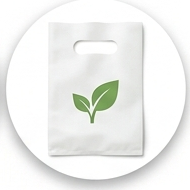 Converted Bags
Note: Conceptual pathway overview. Production processes, polymerization pathways, and compounding stages differ across individual material families.
Major Material Families Used in Flexible Packaging
Each material family offers distinct physical characteristics, conversion opportunities and functional trade-offs:
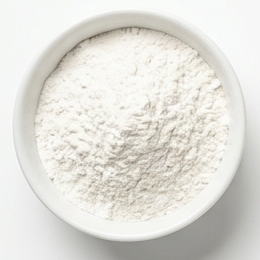
Starch-based materials
Renewable feedstock, widely compounded in blends for flexible bags and agricultural films.
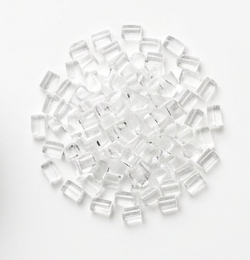
PLA (Polylactic acid)
High clarity and stiffness; used in oriented films and blister packaging formats.
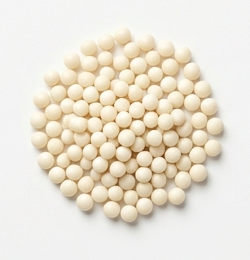
PBAT
Highly flexible aliphatic-aromatic co-polyester used in compostable bag blends.
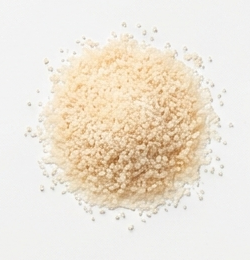
PHA
Microbially produced polyesters capable of ambient marine and soil degradation.
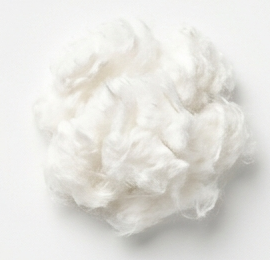
Cellulose materials
Derived from plant fiber; applied in transparent films, coatings, and laminates.
How Do These Materials Compare?
This overview highlights key characteristics across commercial polymer families. Actual physical performance depends on the specific resin grade, formulation, compounding, and intended film gauge.
| Material | Bio-based | Typical properties | Potential advantages | Key considerations |
|---|---|---|---|---|
| Starch-based | Flexible; frequently blended | Renewable origin; proven flexible bag capability | Moisture sensitivity; mechanical properties vary by blend | |
| PLA | Rigid to semi-flexible; high clarity | High tensile modulus; useful for selected films | Thermal performance; requires industrial composting conditions | |
| PBAT | Highly flexible; ductile elongation | Excellent film-forming and puncture properties | Feedstock origin (check bio-content); formulation dependencies | |
| PHA | Diverse properties across copolymer types | Natural biodegradability in soil and water | Current cost premium; market supply scale; thermal processing | |
| Cellulose-based | Semi-flexible; excellent gas barrier | Abundant renewable origin; high clarity | Moisture vapour transmission; requires protective top-coatings |
What Determines Performance in Flexible Packaging?
In flexible packaging, material selection cannot rely solely on environmental origin. Successful deployment requires evaluating four core performance vectors against application demands:
Bag and film structures must withstand dynamic loading, dart impact, and tear propagation during transit. Blending ductile polyesters (PBAT) with stiffer bio-resins (PLA/Starch) balances tensile modulus with tear resistance.
Water Vapour Transmission Rate (WVTR) and Oxygen Transmission Rate (OTR) dictate food freshness and shelf life. While PLA and cellulose provide strong aroma and gas barriers, moisture-sensitive starch blends require protective engineering.
Film converting requires consistent heat-seal initiation temperature (SIT) and robust hot-tack strength on high-speed automated packaging lines without melting or adhering to hot sealing bars.
Bio-based flexible packaging must maintain functional integrity during storage and shipping in humid tropical conditions without premature softening, degradation, or blocking on the roll.
From Use to End-of-Life: Different Pathways
The environmental outcome depends on the material, the intended use and the waste-management infrastructure that is actually available in the target market.
Use
Flexible packaging in daily life
How to Choose the Right Material: A Decision Framework
To avoid costly packaging failures or misleading claims, enterprises should evaluate bio-based alternatives through a structured sequential process with an iterative validation loop:
Application Requirements
Define packaged product type, moisture/fat content, weight load, service life, and handling conditions.
Performance Requirements
Determine required WVTR, OTR, puncture resistance, seal strength, and automated packaging speed.
Potential Material Selection
Shortlist resin candidates (e.g. Starch-PBAT blend, PLA film, or cellulose laminate structure).
Target End-of-Life Pathway
Confirm destination market infrastructure: industrial organic collection, home composting, or recycling.
Evidence Review
Verify independent laboratory certificates (EN 13432, ASTM D6400, food contact migration data).
Product Pilot Validation
Run converting trials on production machinery, test seal integrity, and evaluate shelf life stability.
Commercial Decision & Rollout
Procure certified resin/films with documented specifications, auditable chain-of-custody, and customer usage guidance.
The Role of Research, Testing and Evidence
Credible sustainable packaging requires verified evidence rather than marketing claims. This four-tier evidence framework demonstrates the progression from raw material characterization to finished product compliance:
Tier 4: Product-Level Certification & Compliance
Formal third-party certification of the completed bag (including inks, adhesives, and closures) under EN 13432, ASTM D6400, or ISO 17088 with traceable registration numbers.
Tier 3: End-of-Life Disintegration & Ecotoxicity Testing
Laboratory verification that the material achieves >90% biodegradation within 180 days, fragments below 2mm in 12 weeks, and leaves no toxic heavy metals or adverse phytotoxicity effects in soil.
Tier 2: Functional Performance & Barrier Data
Measured test data verifying mechanical tensile strength, dart impact resistance, heat-seal strength, and barrier rates (WVTR and OTR) under standard ISO and ASTM methods.
Tier 1: Material Composition & Bio-Based Content
Analytical proof of renewable carbon content via carbon-14 dating (ASTM D6866 / EN 16640) and detailed Safety Data Sheets (SDS) identifying base polymers and compounding additives.
*Explanatory framework illustrating scientific validation progression; not an official government certification hierarchy.
How Ecospear Can Help Businesses
Ecospear manufactures sustainable packaging, including biodegradable and compostable bag solutions. We work with businesses to understand their application, discuss material options and provide relevant technical information to support more informed packaging decisions.
Application discussions
Discuss bag requirements, intended service loads, and suitable compostable product alternatives.
Material information
Access transparent technical data, resin specifications, and verifiable testing documentation for relevant products.
Commercial evaluation
Support packaging portfolio reviews, procurement discussions, and pilot sample conversions.
Practical approach
Make grounded choices guided by application performance, credible technical evidence, and realistic end-of-life routes.
Reviewing your packaging?
If your business is evaluating bag requirements or exploring sustainable-packaging alternatives, speak with Ecospear about your application and technical requirements.
Conclusion & Strategic Outlook
Bio-based polymers offer real opportunities to lower dependency on virgin petrochemicals and develop targeted solutions for applications where organic contamination prevents conventional mechanical recycling.
However, sustainability in packaging is achieved not through broad assumptions, but through rigorous material matching: pairing the specific functional requirements of a product with certified material evidence and accessible waste-management infrastructure.
Official References & Scientific Literature
For peer-reviewed research, standardized test procedures, and official compostability criteria, consult the following sources:
Recent Advances in Antimicrobial Food Packaging From Bio-Based Polymers: A Comprehensive Review
Journal of Applied Polymer Science (2025). Comprehensive analysis of barrier, active film properties, and polymer matrix interactions.
EN 13432 & ASTM D6400: Standards for Compostable Packaging
European Committee for Standardization & ASTM International. Requirements for packaging recoverable through industrial composting and anaerobic digestion.
European Bioplastics (EUBP) & Nova-Institute Market Reports
Global market data on bio-based polymer production capacities, feedstock land use, and material family lifecycle assessments.